

Tile Master Review - Matching, Cash-out and RTP
Learn How to Play
Tile Master - official features and review
Tile Master turns a sequence of random tile matches into a cash-out decision. Rivers, roads and towns represent three risk modes, rather than a construction puzzle where placement skill controls the result. This guide separates the mode-specific payout table from the simplified headline figures.
Written by Cryptogambler. Updated November 7, 2026.
Explore games at MELBET
- Explore the current games catalogue
- Availability and account terms are shown on the site
Three landscapes, three payout ladders
BGaming launched Tile Master on December 10, 2024. Its published theoretical RTP is 97.36%. The central choice is between low, medium and high volatility, represented by river, road and town tiles. Each mode has its own payout ladder, so quoting one maximum without its mode loses useful information.
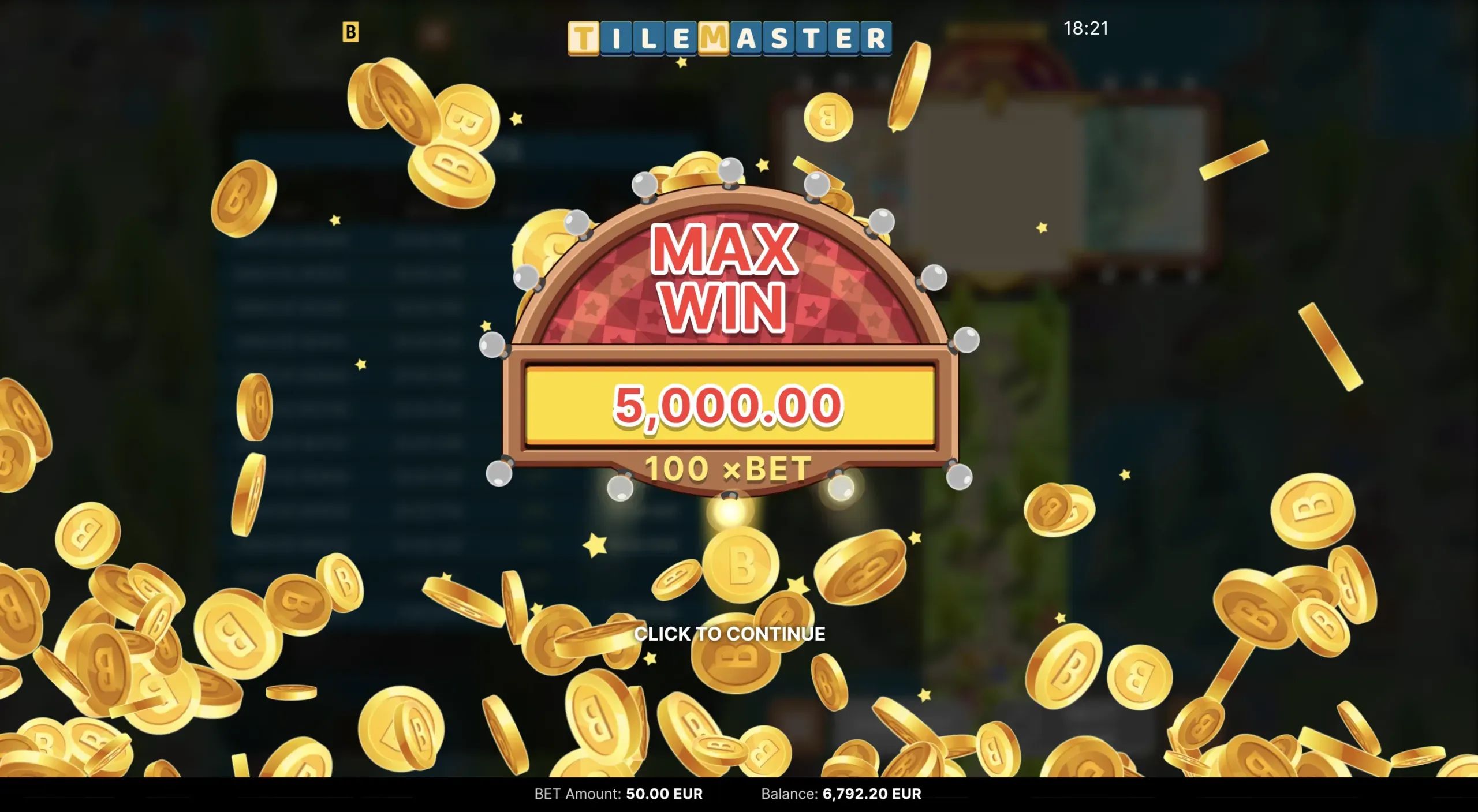
The official rules list twelve payout steps. At the final step, low mode reaches 25x, medium reaches 100x and high reaches 1000x the bet. The profile's summary table displays 100x, which corresponds to the medium ladder rather than the whole range. The mode-specific rules are the clearer reference for this review.
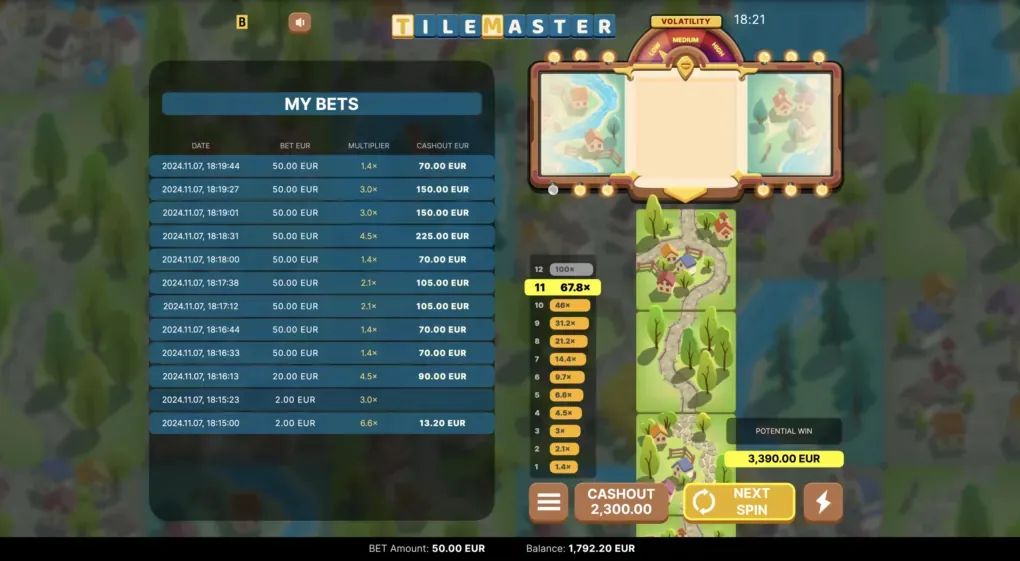
The landscape gradually builds upward as matching tiles appear. This is a visual record of the sequence, not a board on which a player can steer the next tile into a winning position. Tile selection changes the risk setting; it does not create a placement-based advantage.

Matching once, then choosing whether to continue
Choose the volatility and stake before pressing Bet. The game displays an initial tile, then a rotating reel stops randomly to add the next tile. Matching types produce a win and allow a choice between cashing out and taking the next spin. A mismatch ends the round and loses both the stake and the winnings retained in that sequence.
The early payout steps already differ substantially. The rules show 1.1x, 1.4x and 1.6x for the first step in low, medium and high modes. At step six the corresponding values are 4.6x, 9.7x and 29.8x. These larger later values compensate for additional uncertainty; they do not make an uninterrupted run more likely.
Treat the Cashout button as a settlement choice. A displayed potential later prize is different from the amount available for immediate collection. Continuing puts the uncollected round result at risk, even if several previous tiles matched.
Automation, history and who it suits
Autoplay lets the player set a number of rounds and a multiplier for automatic cash-out. Turbo makes the reel dispense tiles faster. These controls alter pacing and settlement instructions, not the random matching logic. A quicker sequence can also use a planned budget more quickly, so review both settings before enabling them.
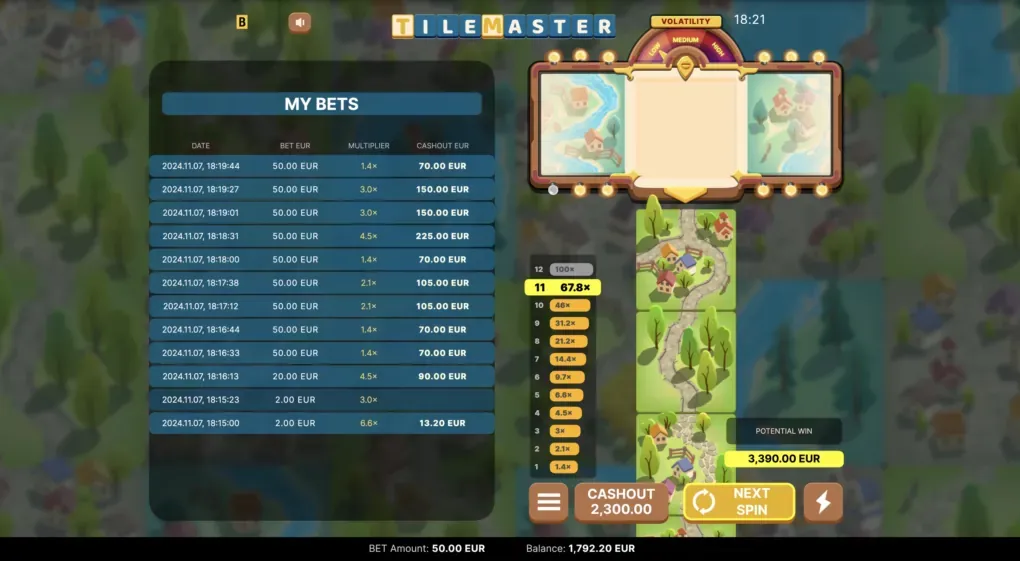
The publisher describes a history display for the latest fifteen spins. It can help review settled outcomes, but it cannot reveal which tile will arrive next. The manual cash-out decision remains a tradeoff between securing the current amount and accepting another possible loss.
Tile Master suits readers looking for a short ruleset with visible payout steps instead of paylines and free-spin bonuses. Its attractive landscape is secondary to the stop-or-continue decision. Before a round, compare the chosen mode's ladder and decide how much of the session budget to risk. The 97.36% RTP describes long-run mathematics and gives no assurance about any individual twelve-step attempt.

Frequently Asked Questions


