

Rocket Dice Review - Over/Under, Risk and RTP Differences
Learn How to Play
Rocket Dice - official features and review
Rocket Dice is a dice-table game rather than a rocket crash title. The main wager compares the sum of two dice with a chosen threshold; an optional Risk round then uses one die to put a successful result at risk.
Written by Cryptogambler. Updated October 26, 2026.
Explore games at Cloudbet
- Explore the current games catalogue
- Availability and account terms are shown on the site
Two dice and a strict comparison
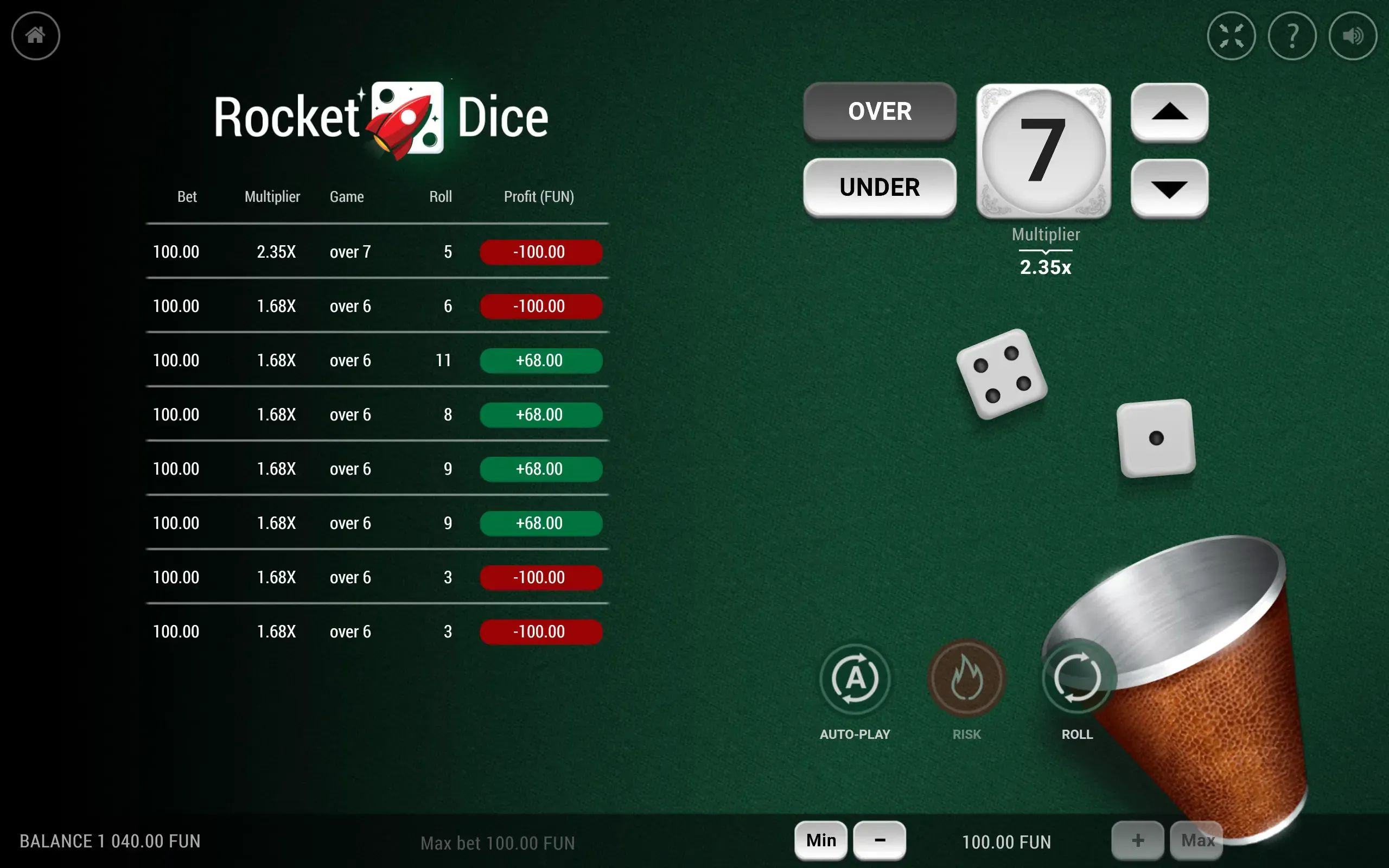
BGaming's official profile dates Rocket Dice to October 22, 2018 and classifies it as low volatility. The player selects a number and either Over or Under, then rolls two six-sided dice. Their top-face values are added. A successful wager requires the sum to fall on the selected side of the threshold; choosing a threshold is not the same as betting that the exact number will appear.

The linked official paytable runs from Over 2 and Under 12 at 1.01x to Over 11 and Under 3 at 35.3x. These pairs describe very different winning conditions. A larger displayed multiplier comes with a narrower set of successful totals, so it should not be interpreted as a free improvement over a smaller multiplier. Check which direction is active before rolling.
The profile mentions numbers from 2 to 12, but that broad interface description should not be read as a payable option for every possible number-direction pairing. The useful authority for the reward is the active game's paytable and displayed multiplier. Its compact interface makes a wrong direction or stake selection easy to overlook when repeating rounds quickly.
Why the RTP needs two figures
The current marketing profile lists 99% RTP. However, the directly linked rules state 97.92%-98.33%, depending on the chosen strategy, and describe a corresponding house edge of 1.67%-2.08%. Those figures do not agree. This review preserves the distinction rather than presenting the higher profile value as a verified return for the retrieved paytable.
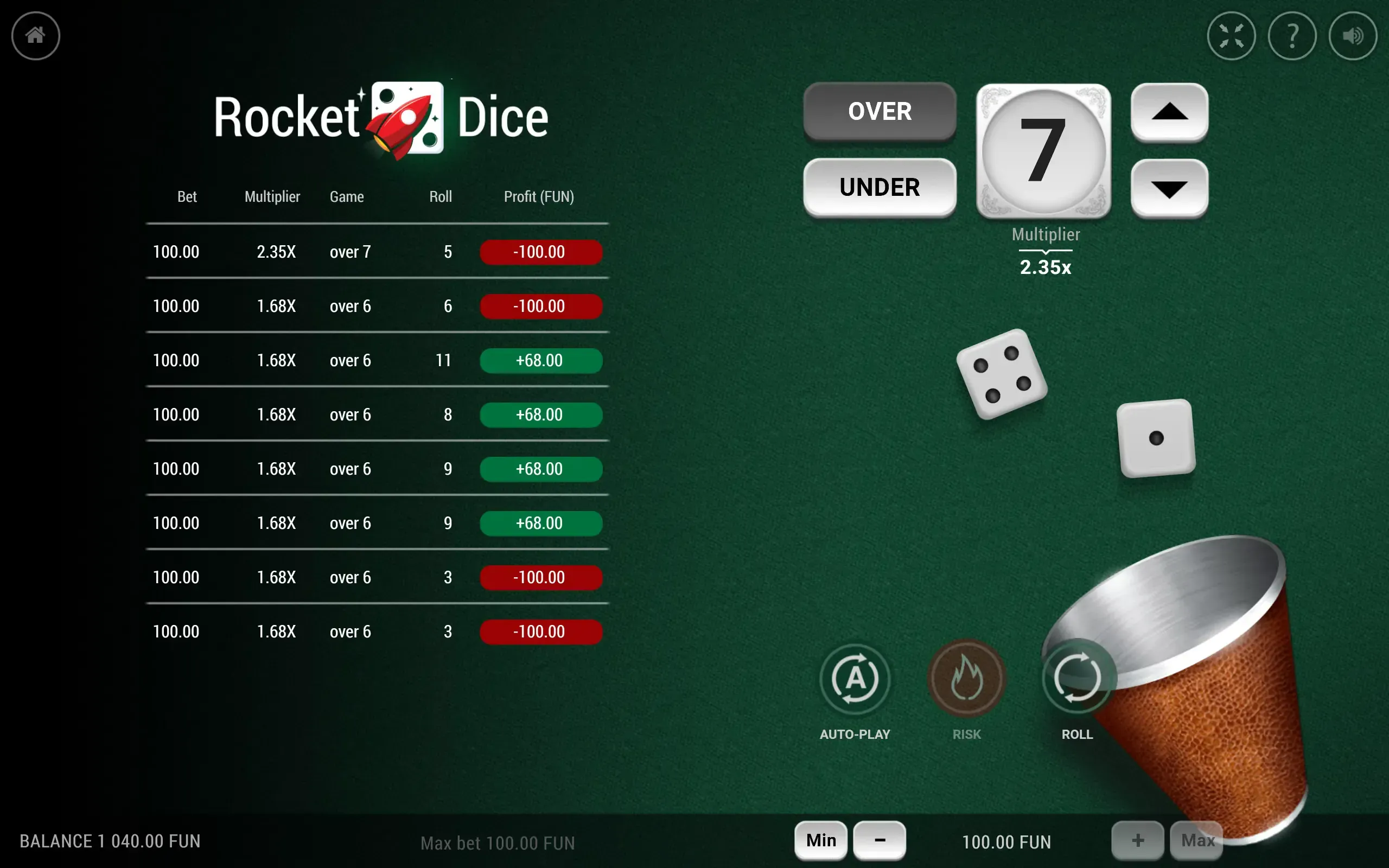
The detailed rules also publish the individual reward multipliers. For example, the central Over 7/Under 7 pairing pays 2.35x, while the extreme Over 11/Under 3 pairing pays 35.3x. These amounts are returns on a successful wager, not guarantees that repeated rolls will recover prior losses. The official FAQ uses 35.30x as its multiplier headline and the profile separately lists EUR 3530 as maximum win.
A history table records earlier bets and results. It is useful for checking what was selected and how a completed round resolved. It does not establish that a particular total is due or that changing direction after a loss produces an advantage. Treat the records as an audit of past play rather than a forecast.
The optional one-die Risk game
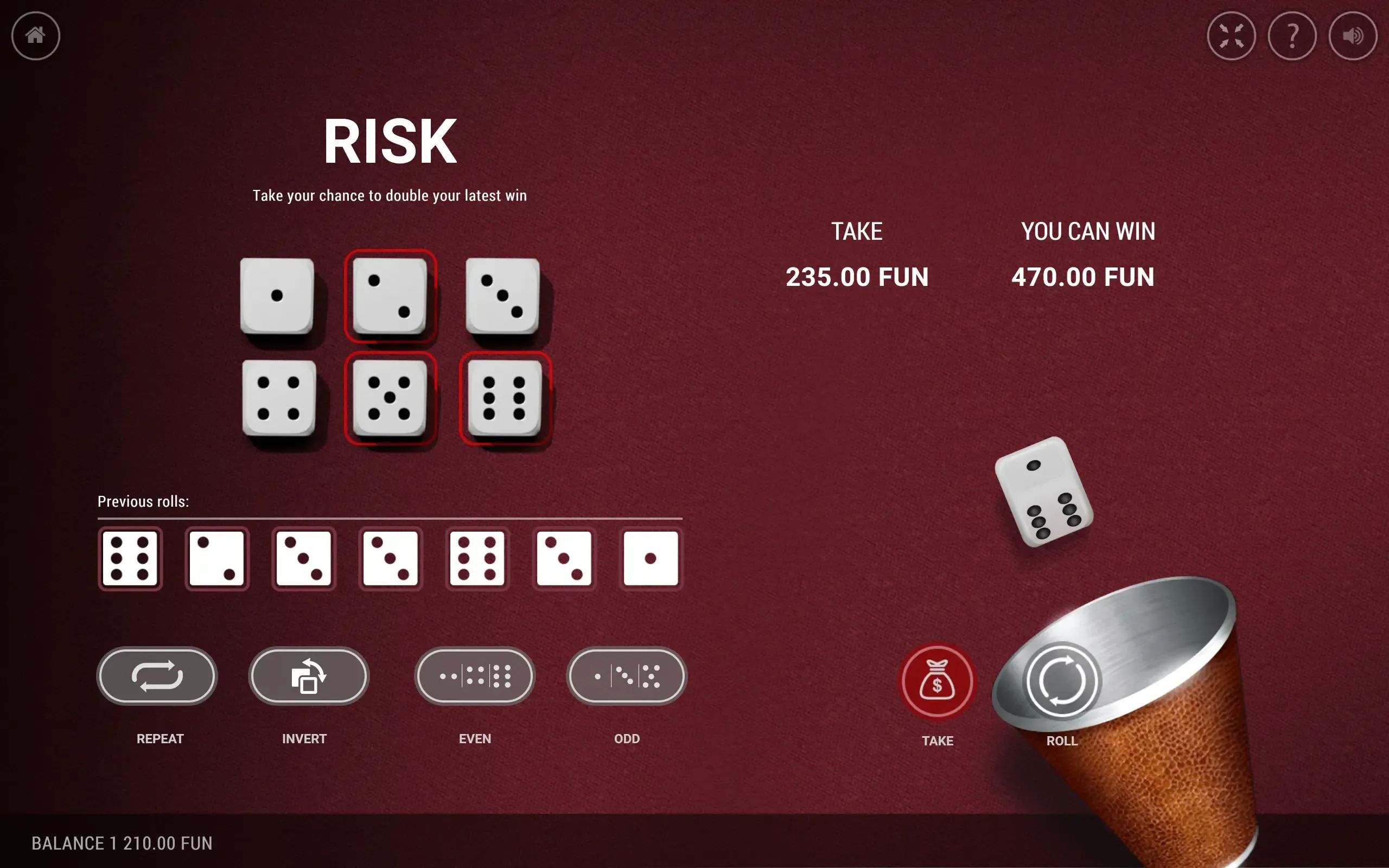
After a winning roll, Risk offers a separate wager on one die. The player selects three of its six faces. A matching result doubles the amount risked, while a miss loses that amount and returns to the main game. The rules explicitly distinguish this single-die event from the two-dice comparison used for an ordinary wager.
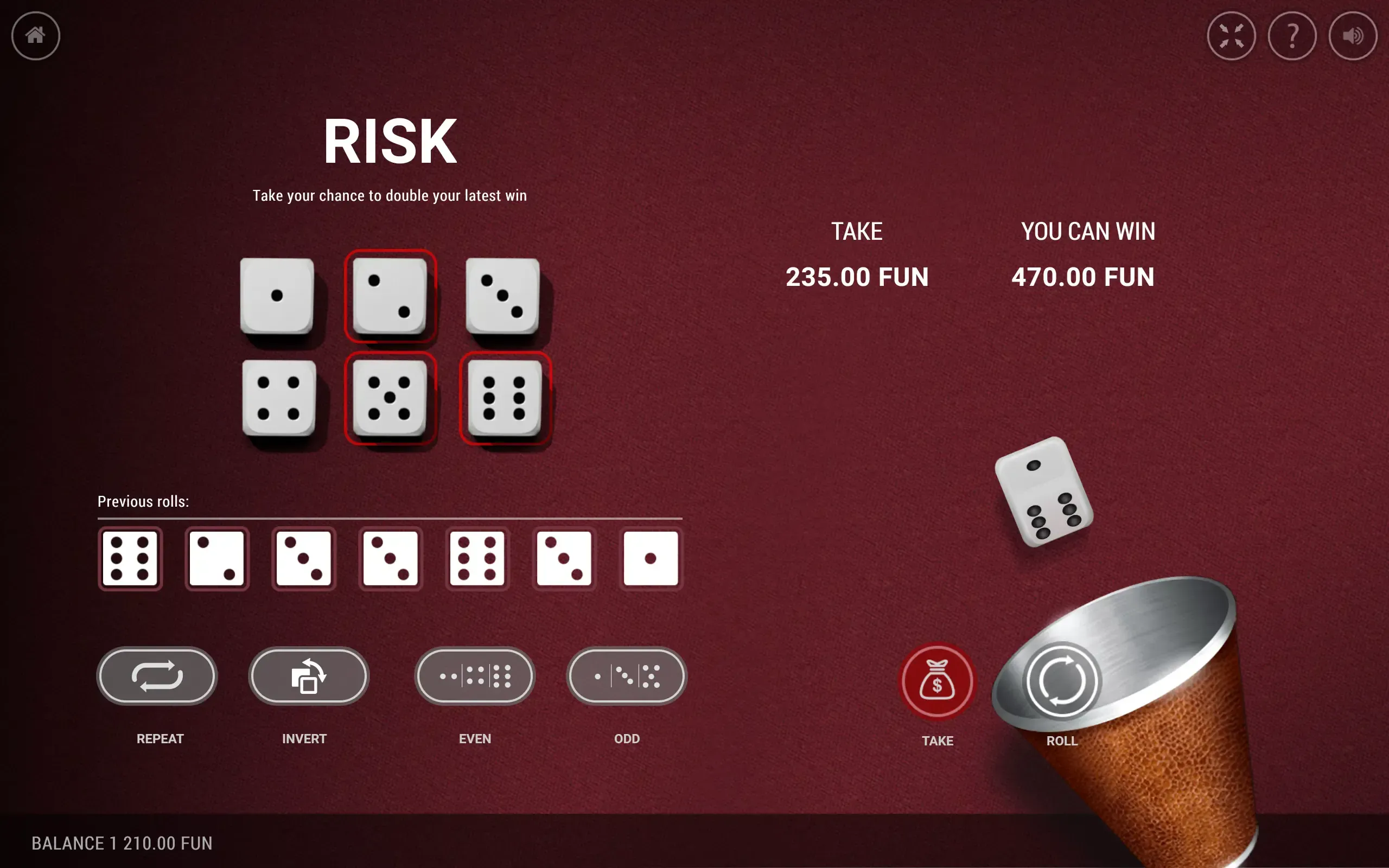
The stated 50/50 choice can make the next outcome simple to understand, but it does not mean the accumulated win is protected. Collecting with Take ends that additional exposure. Repeated successful Risk attempts are subject to the game's amount limit, so doubling should not be described as an unlimited ladder. Automatic roll settings similarly change repetition and pacing rather than the probability of an individual result.
Rocket Dice suits readers wanting a short, numerical casino game with an inspectable paytable. Its clearest strength is the separation between selecting a two-dice condition and gambling a win on one die. The important limitation is the disagreement between the profile RTP and linked rules. Before real-money use, identify the active version, read its paytable and maximum payout, and set an amount to stop at. Neither the low-volatility label nor an extreme multiplier eliminates losing rolls.
Frequently Asked Questions


