

Pop Zen Review - Clusters, Wild Features and RTP
Learn How to Play
Pop Zen - official features and review
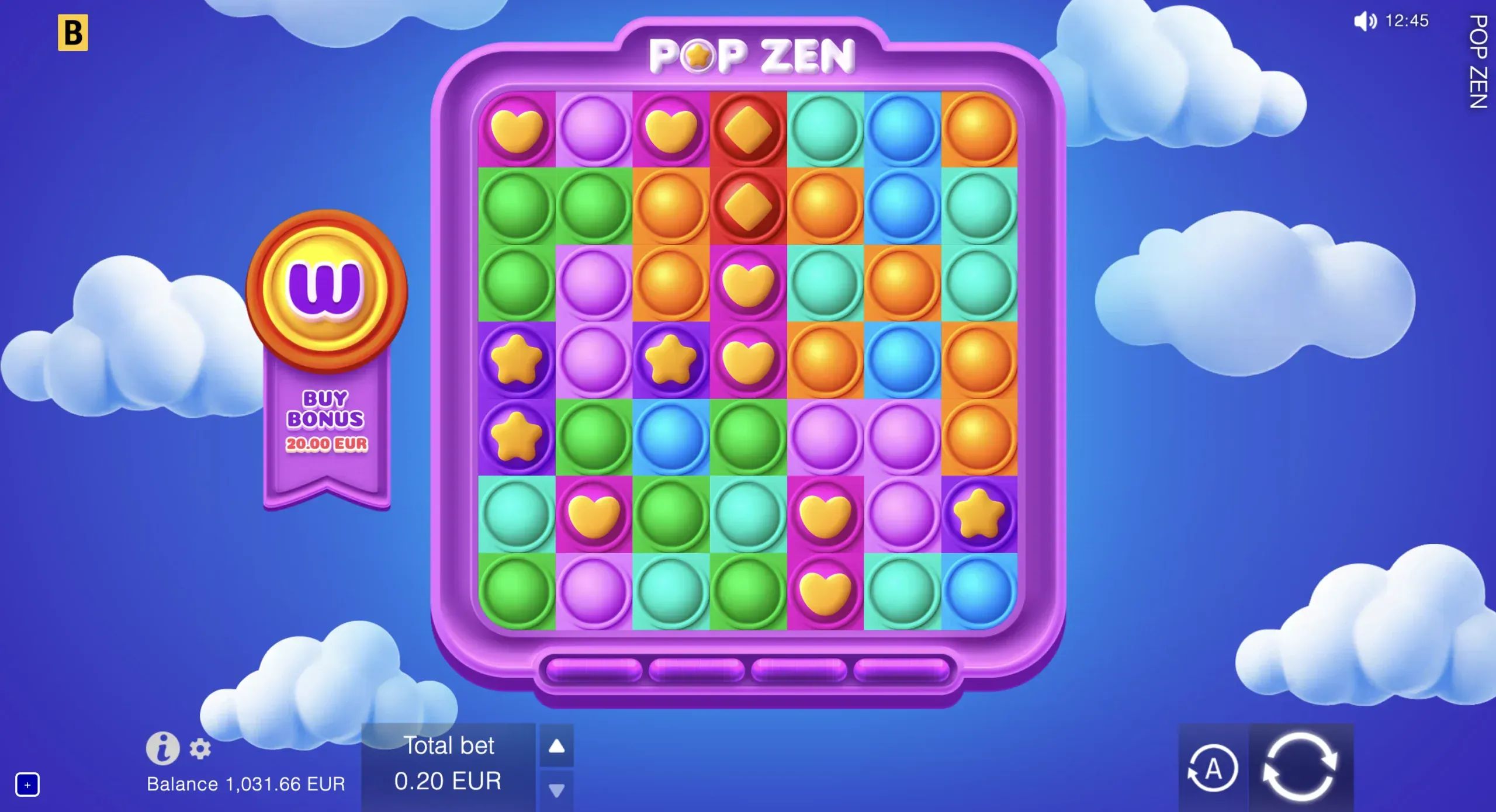
Pop Zen replaces conventional reel lines with a field of soft-looking bubbles and a chain of changing symbols. Behind the calm visual style sits a very-high-volatility cluster game, where winning symbols advance a meter toward several Wild features. The mechanics below follow BGaming's profile and rules.
Written by Cryptogambler. Updated November 7, 2026.
Explore games at JOY CASINO
- Explore the current games catalogue
- Availability and account terms are shown on the site
A bubble grid with substantial variance
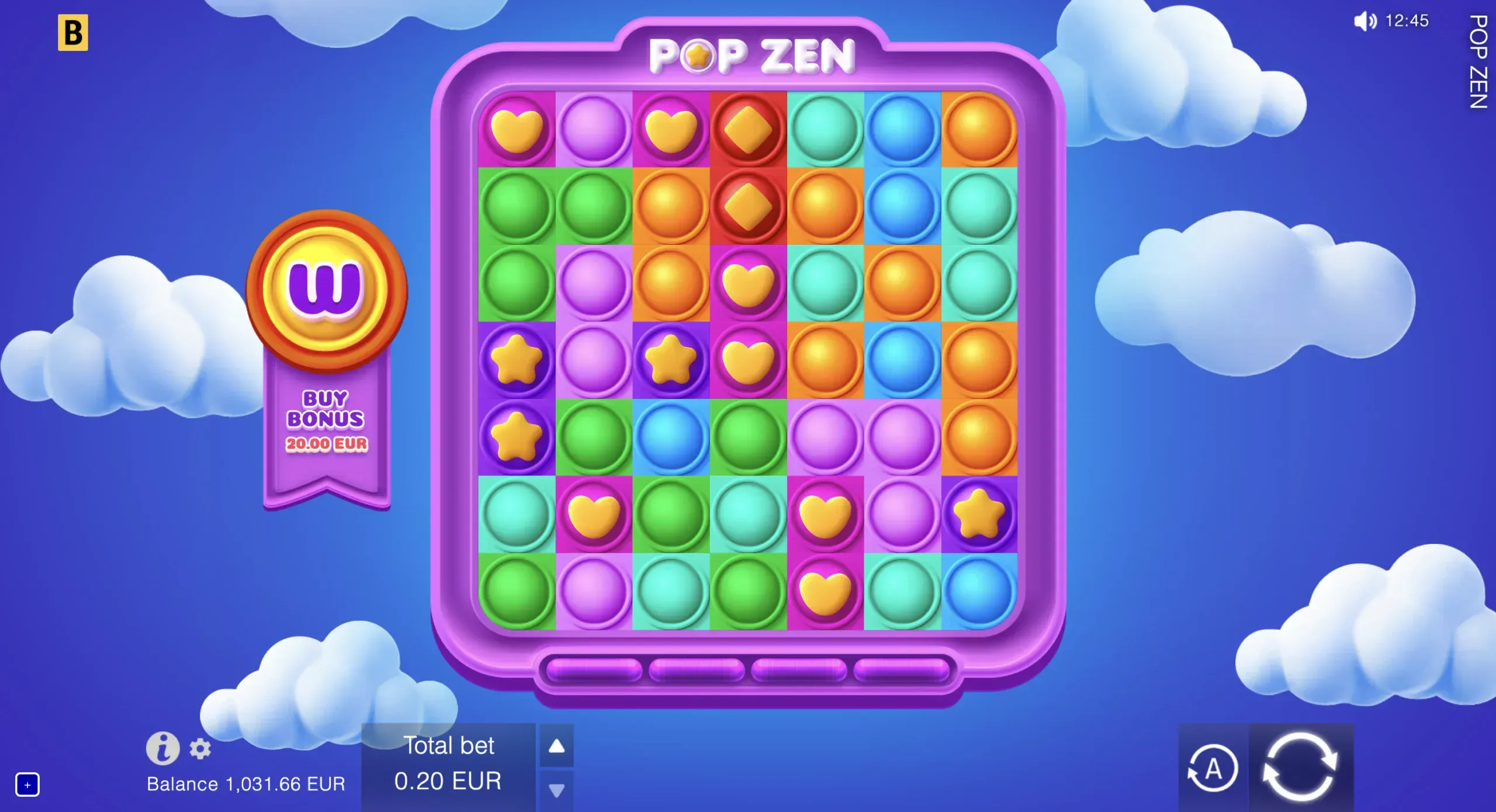
BGaming released Pop Zen on February 8, 2024. It uses a 7x7 grid and cluster payouts rather than fixed paylines. The published theoretical RTP is 96.3%, with very high volatility and a maximum multiplier of 12000x. The toy-inspired presentation should not be mistaken for a low-risk payout model.
Five or more identical symbols connected horizontally or vertically form a paying cluster. Winning symbols disappear, the remaining ones fall, and new symbols refill the empty spaces. The same paid spin can therefore contain several consecutive evaluations. Refilling stops when no further paying combination is formed.
Four matching symbols arranged in a square can form one 2x2 Big symbol. When that Big symbol contributes to a winning combination, its payout is doubled. The official profile and rules describe the combination of multiple Big-symbol multipliers differently, so this review does not assign a combined formula to that situation. Consult the active game's help before relying on it.

Progress milestones and four changing features
Winning symbols contribute to a 100-symbol progress cycle, with an additional feature at each 25-symbol milestone. The publisher presents the meter as a countdown, while the rules describe points accumulating upward. Both descriptions connect the cycle to the same progression; the meaningful unit is a winning symbol, not simply a paid spin.
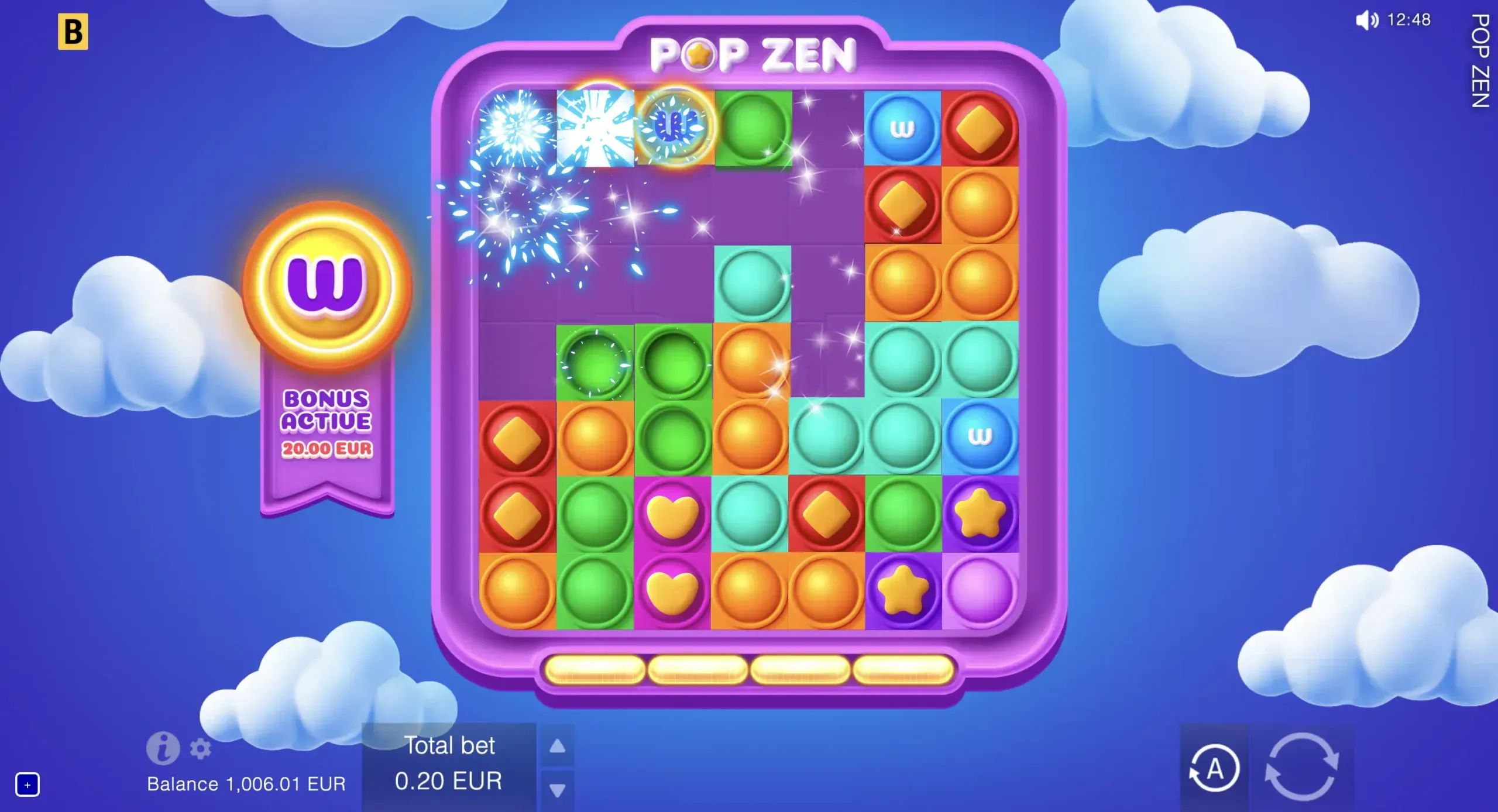
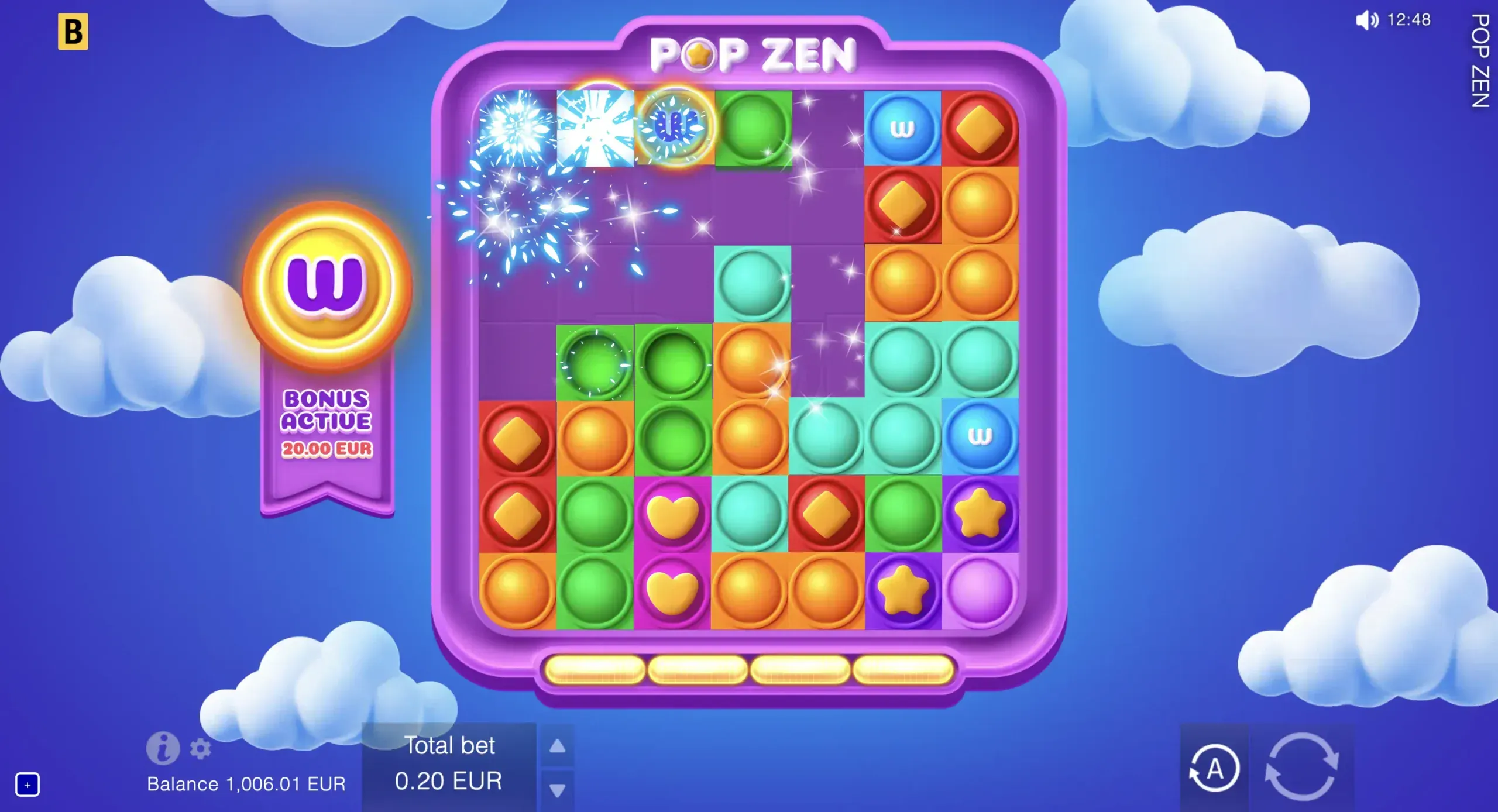
Wild Blast changes three to six symbols into Wilds and removes their orthogonal neighbors without paying those removed symbols. Smash removes low symbols without a payout. X-lines places a central Wild and changes symbols along its diagonals into one chosen symbol type, leaving existing Wilds intact. Clone converts a selected symbol and its matching copies into another type.
Wilds substitute for ordinary symbols and are not altered by those four extra features. This distinction helps explain why a removal animation is not always a win: some actions prepare the next refill rather than directly paying a cluster.
The Pot, smaller transformations and buying access
Completing the progress cycle activates the Pot, called Wild Drop in the rules. Its sequence begins with a 3x3 Wild, then two 2x2 Wilds on the second refill and nine individual Wilds on the third. Winning Wilds disappear. The sequence creates several opportunities, but none of the three waves guarantees the maximum payout.
Backlit low symbols can transform into two Wilds after they form a paying combination. On a nonwinning spin, the Re-spin feature can also change a random number of symbols into Wilds and recalculate the result. These are separate mechanisms from the meter's milestone features.
Buy Bonus purchases direct access to the Pot at the price shown in the game. Pop Zen is best approached as a dense cascade design, with several sources of symbol changes to follow. Readers who prefer simple line accounting may find it busy. Check the help screen, purchase cost and session budget first; a relaxing soundscape does not reduce the financial uncertainty of a random outcome.
Frequently Asked Questions


