

Mechanical Clover Review - RTP, Respins and Risk Game
Learn How to Play
Mechanical Clover - official features and review
Mechanical Clover wraps a small fruit-style reel window in brass machinery and green steampunk artwork. The real distinction is mechanical: a qualifying central Wild opens 27 lines and a sequence of respins, while a separate card game can put a collected main-game win at risk.
Written by Cryptogambler. Updated October 20, 2026.
Explore games at Cloudbet
- Explore the current games catalogue
- Availability and account terms are shown on the site
Small reels, substantial feature changes

Mechanical Clover was released by BGaming on April 5, 2021. Its current official profile lists a 95.42% theoretical RTP, high volatility and a 24,360x maximum multiplier. The maximum is a publisher specification, not a target that a particular stake or playing schedule can reliably reach.
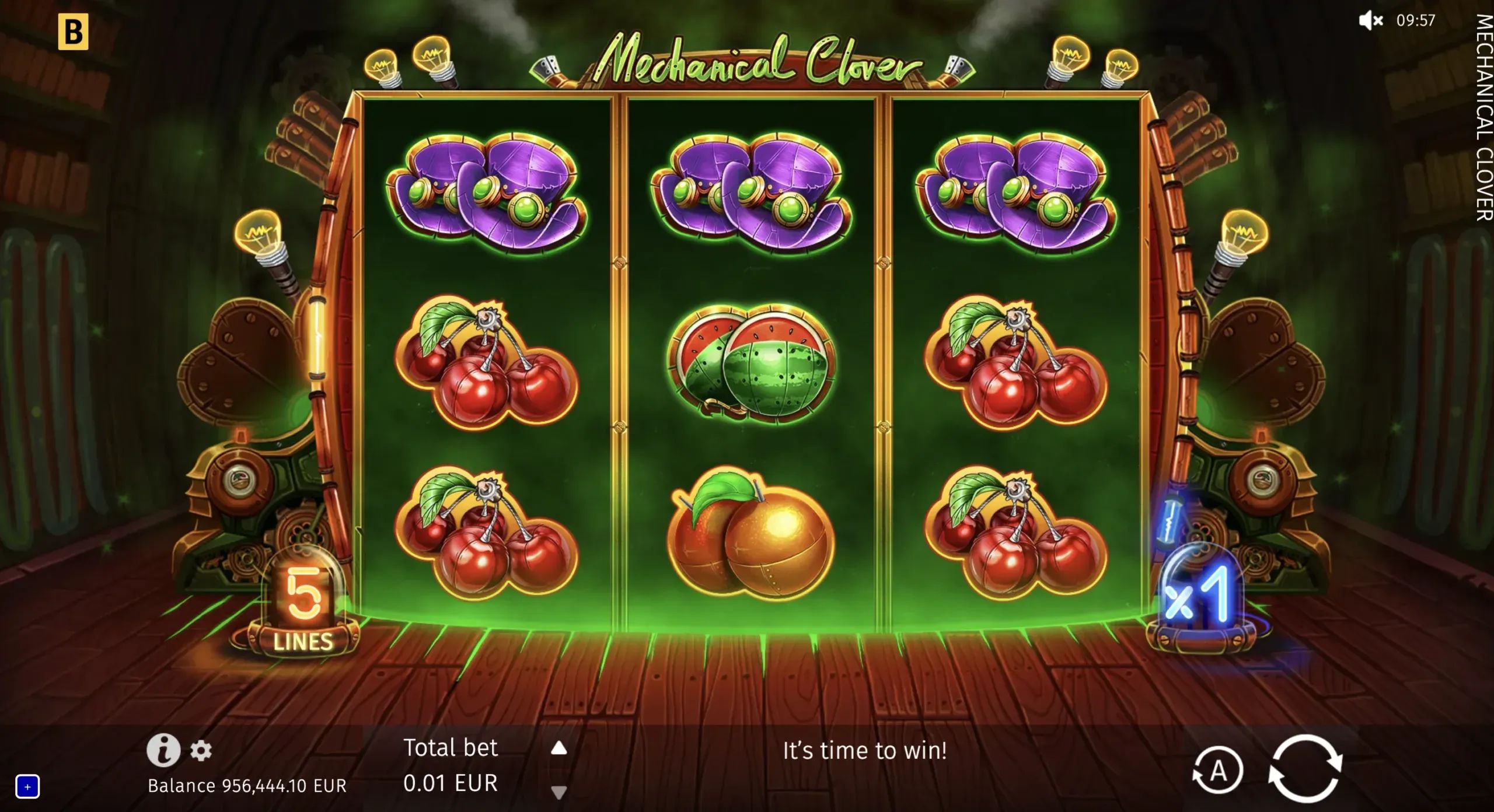
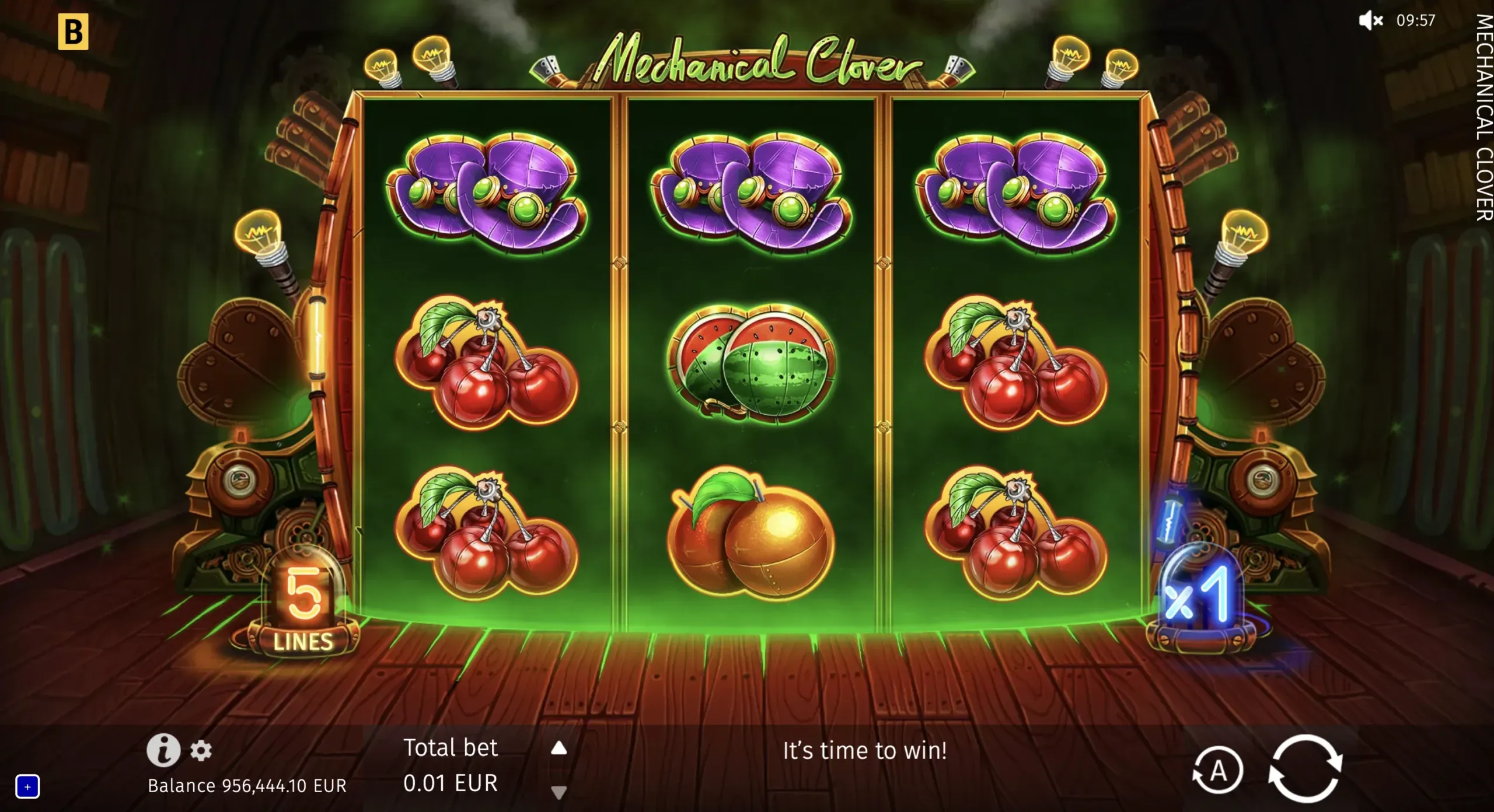
The three-by-three reel window initially uses five paylines. Fruit, sevens and the central Wild make the game recognizable as a classic slot, but the feature mode alters both line coverage and the way symbols remain on the screen. That change matters more than the industrial decoration surrounding the reels.
This is a game for readers who prefer watching a small number of positions evolve. It has fewer visual distractions than a large cascade board, although the shift from five to 27 lines requires attention. Counting visible matching symbols without checking the active mode can give a misleading impression of what should pay.
The listed high volatility also deserves more weight than the familiar fruit symbols. A compact layout is a presentation choice, not evidence of steady returns. The theoretical RTP applies across a large body of play and should not be used as a prediction for one bonus or one session.
How the Wild opens the Respin Bonus
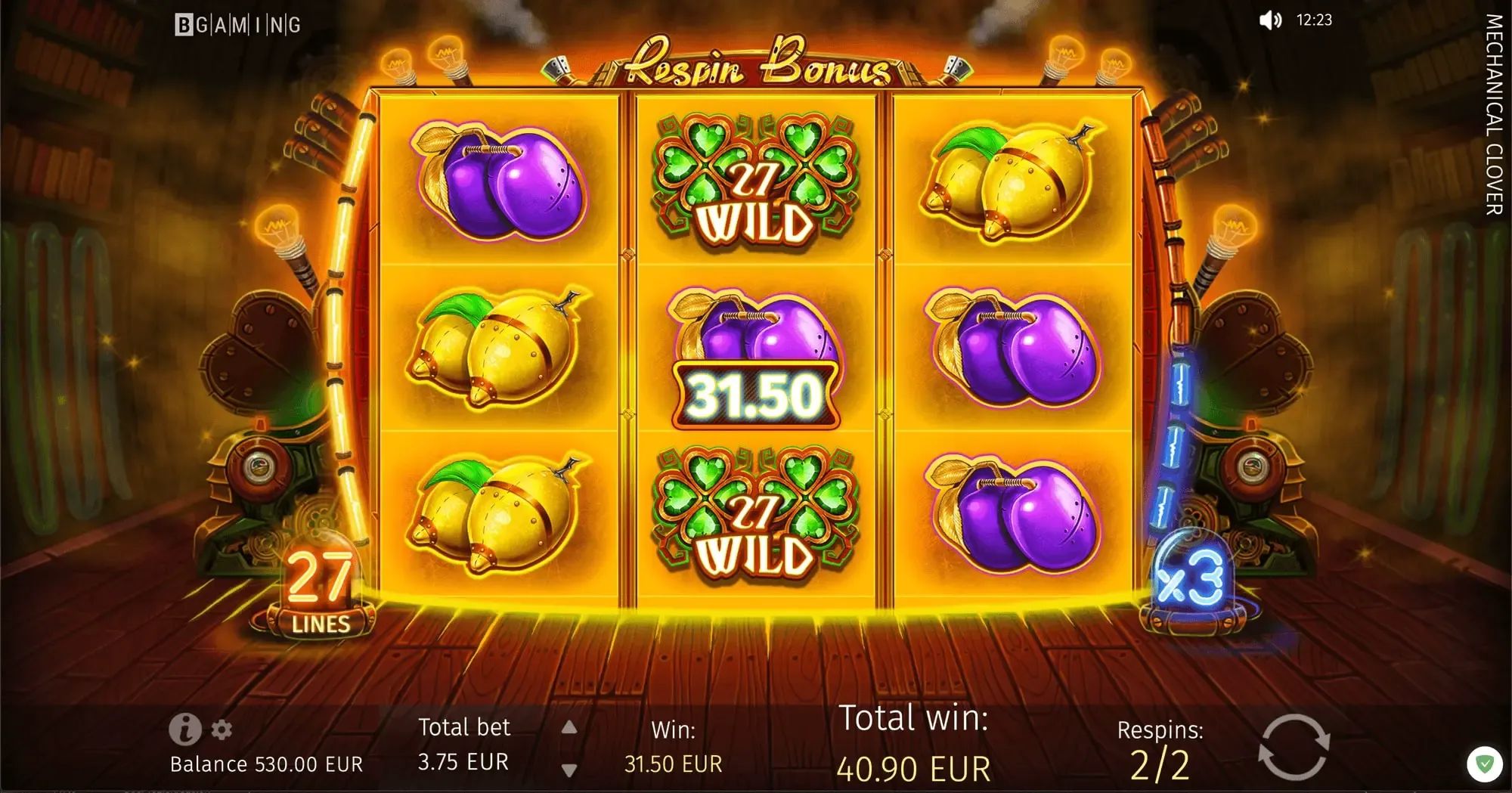
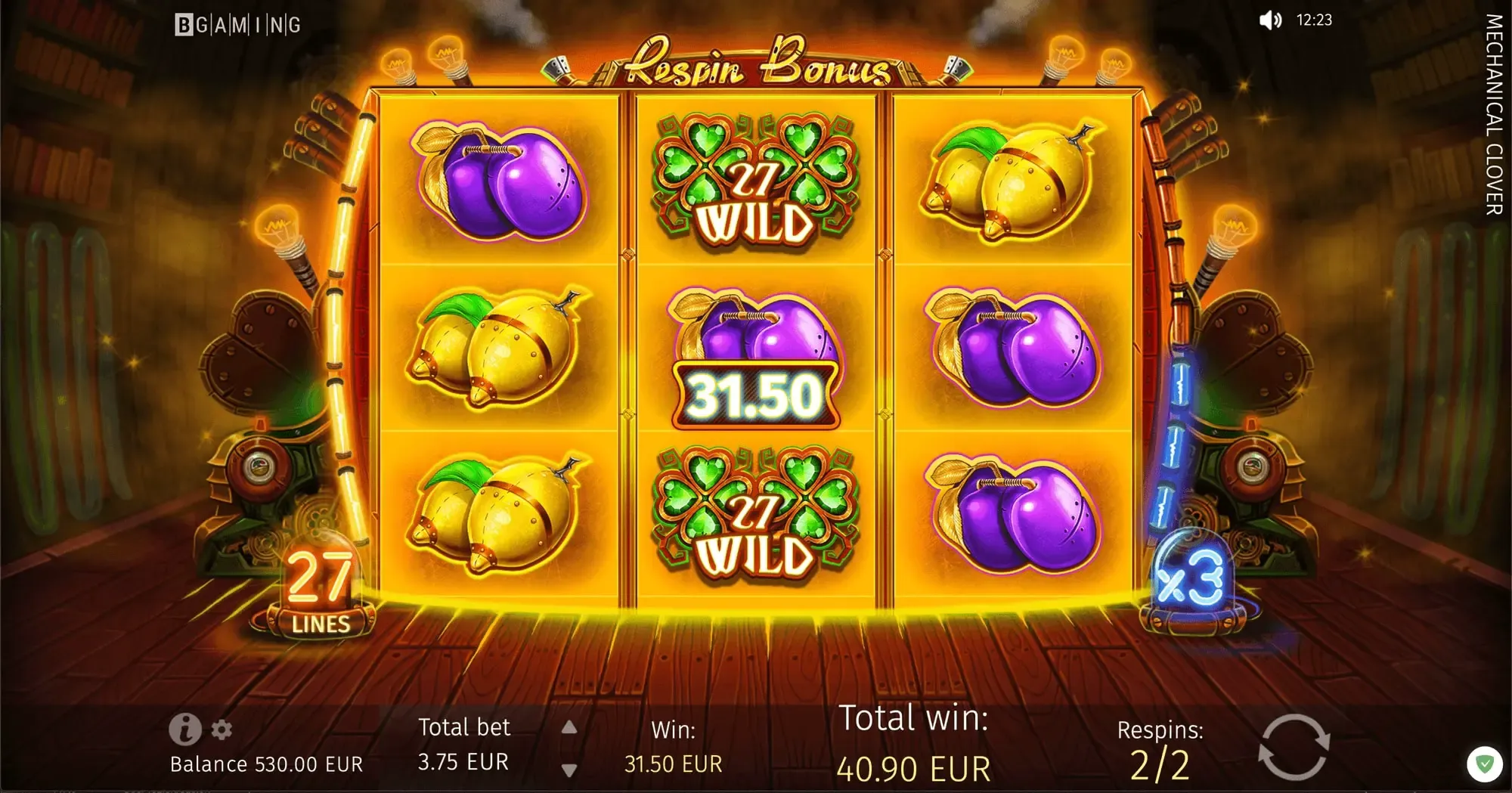
The Wild is restricted to the central reel. It substitutes in a line and triggers the Respin Bonus when it completes a winning combination. The rules expand evaluation to 27 paylines for the qualifying result and the bonus sequence. A Wild appearing in the correct reel position still needs the stated winning condition to start the respins.
During the feature, symbols involved in winning combinations remain in place. Other positions clear for the next respin. The sequence can provide one to six free respins, with the multiplier rising from 2x to 7x as the series advances. The important visual cue is therefore the set of retained symbols, not simply the number of spins already shown.
The sequence stops when no new winning combination appears or when sticky symbols fill the available positions. It is not a fixed package of six spins on every trigger. A shorter feature is consistent with the rules, even if the opening screen shows the highest possible multiplier.
The example image of the main game shows the five-line mode. Comparing it with the bonus image below makes the line change easier to understand without assuming that every ordinary spin receives the expanded coverage.
Respins, the optional gamble and our assessment
The separate Risk Game becomes available after a main-game win. One dealer card is face up and four candidate cards are face down. Choosing a higher card doubles the amount at risk; a tie repeats the card round, while a loss ends the gamble. The linked rules describe a 54-card deck with two jokers that can appear for the player.
Up to ten successful doublings are permitted. That upper limit is not a promise of ten wins, and the entire current amount is exposed each time. Collecting the existing win is a separate choice. The card option should not be treated as a method of repairing a losing reel session.
Before playing, distinguish the base bet, a reel payout and the amount offered to the card game. They are different stages of the balance calculation. The official screenshots demonstrate the interface; their monetary values do not establish a universal minimum stake or a recommended gamble size.
Mechanical Clover works best when its contrast is the attraction: quiet classic reels followed by a compact sticky-symbol sequence. Its tradeoffs are a lower listed RTP than many newer releases and a high-volatility profile despite the small board. The optional card round adds another decision, but enjoying the reel feature does not require accepting that extra risk.
Research uses the official BGaming profile and linked Mechanical Clover rules version 1.0, dated March 16, 2021. The profile supplies the public release date; the earlier rules date is not presented as a second release.
Frequently Asked Questions


