

Heads and Tails Review - Coin Flips, Payout and RTP
Learn How to Play
Heads and Tails - official features and review
Heads and Tails strips a casino game down to a single decision: which side of a virtual coin will land face up? BGaming gives this familiar format a Bitcoin-inspired appearance and a fixed payout rather than a ladder of increasingly risky prizes.
Written by Cryptogambler. Updated October 29, 2026.
Explore games at BC.GAME
- Explore the current games catalogue
- Availability and account terms are shown on the site
A coin game with a clear contract

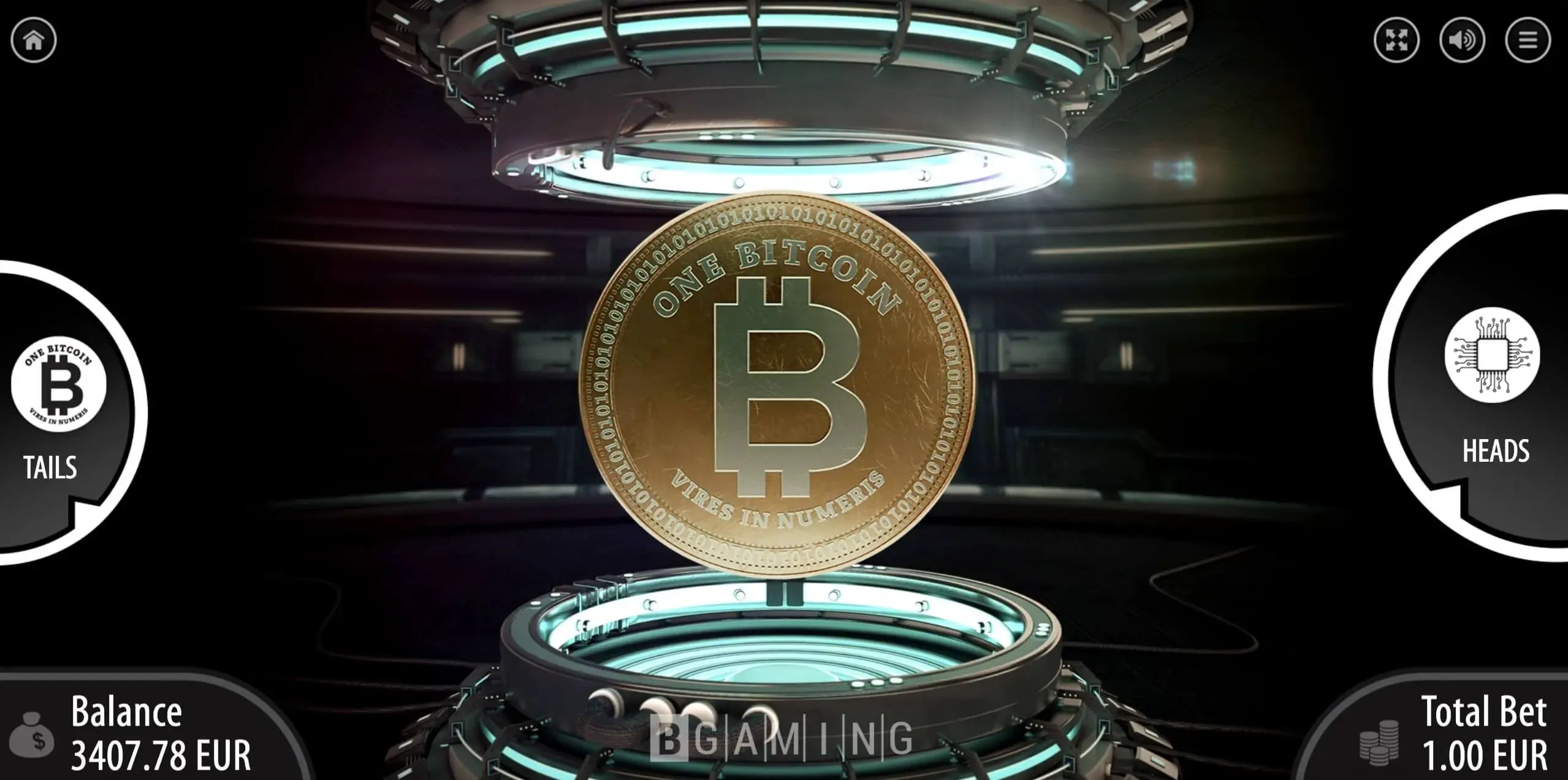
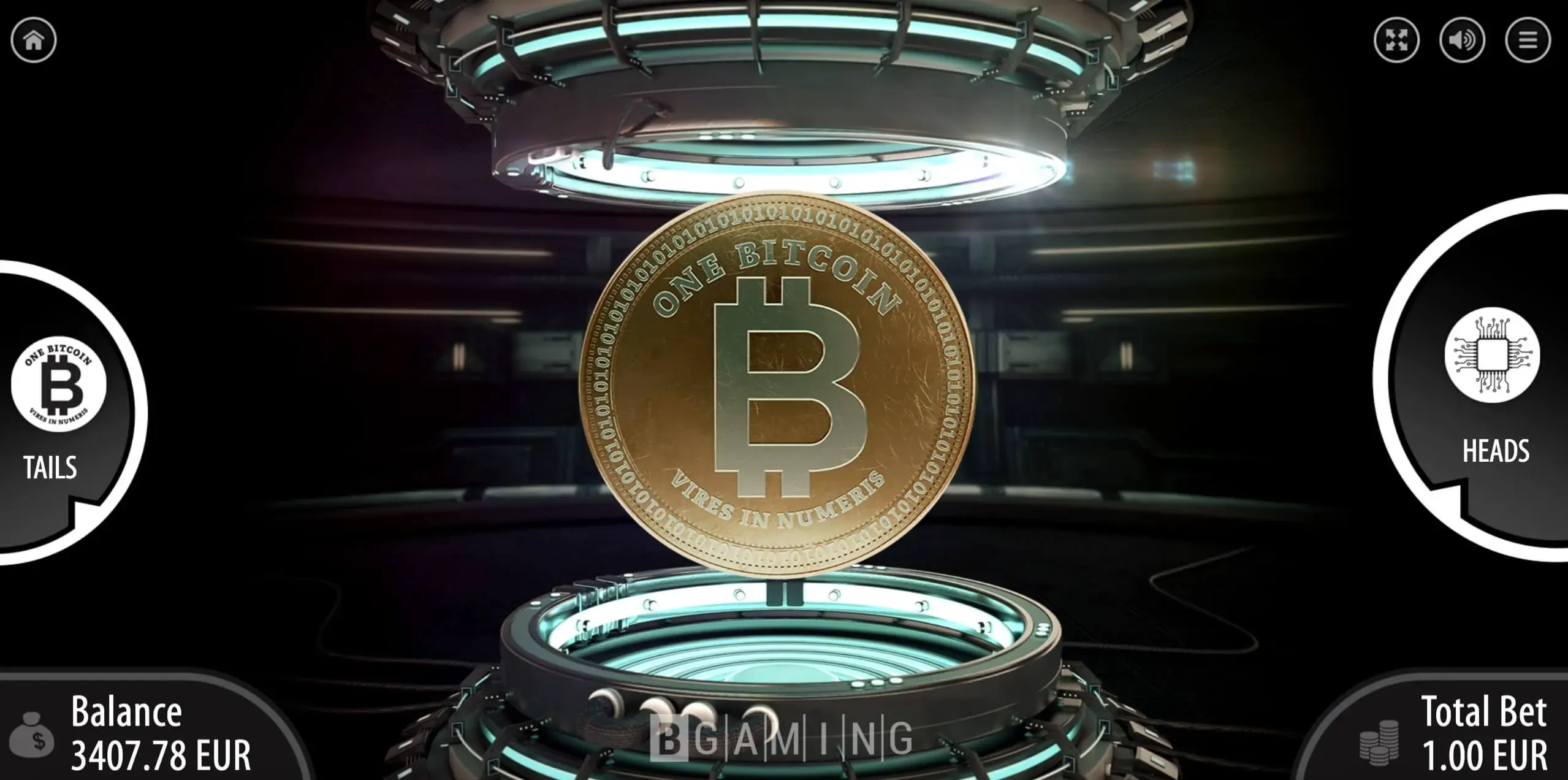
BGaming released Heads and Tails on April 2, 2016. Its futuristic chamber suspends a large gold coin between two generators. A Bitcoin emblem marks one face; a circuit-chip design marks the other. Those symbols identify the two choices. They do not mean that a player must use Bitcoin or that the game follows changes in a cryptocurrency price.
The official profile describes an equal chance for each side and a 1.98x payment for a correct selection. The linked rules state the same payout and a theoretical RTP of 99%. There are no reels, symbol combinations or bonus triggers to interpret. The decision is settled by the outcome of that flip.
The interface keeps Heads and Tails buttons beside the coin, with the stake configured through Settings. Before confirming a selection, check the amount shown as the current bet. A small change matters here because every click represents another complete wager rather than one stage of a shared round. The simple layout reduces the number of controls to learn, but it also makes repeated betting easy to overlook.
What 1.98x actually returns
The multiplier describes the total returned on a successful bet. For a stake of 10 units, a correct guess returns 19.80 units, including the original 10. The net gain is therefore 9.80 units. An incorrect guess loses the 10-unit stake. Reading 1.98x as an additional profit of 19.80 would materially overstate the payment.
The arithmetic also explains the published RTP: a 50% chance multiplied by a 1.98 total return gives 0.99. Over a very large theoretical sample, that corresponds to 99% returned and a 1% house edge. It does not mean that a particular session gives back 99 out of every 100 units deposited, or that a losing run must soon correct itself.
Both choices have the same stated chance. Switching from Heads to Tails after several repeated results does not make the other face due. Keeping the same selection is not a stronger strategy either. The useful decision is how much exposure to accept, because changing a stake changes the amount won or lost while leaving the stated payout relationship intact.
Reading the result and judging the format
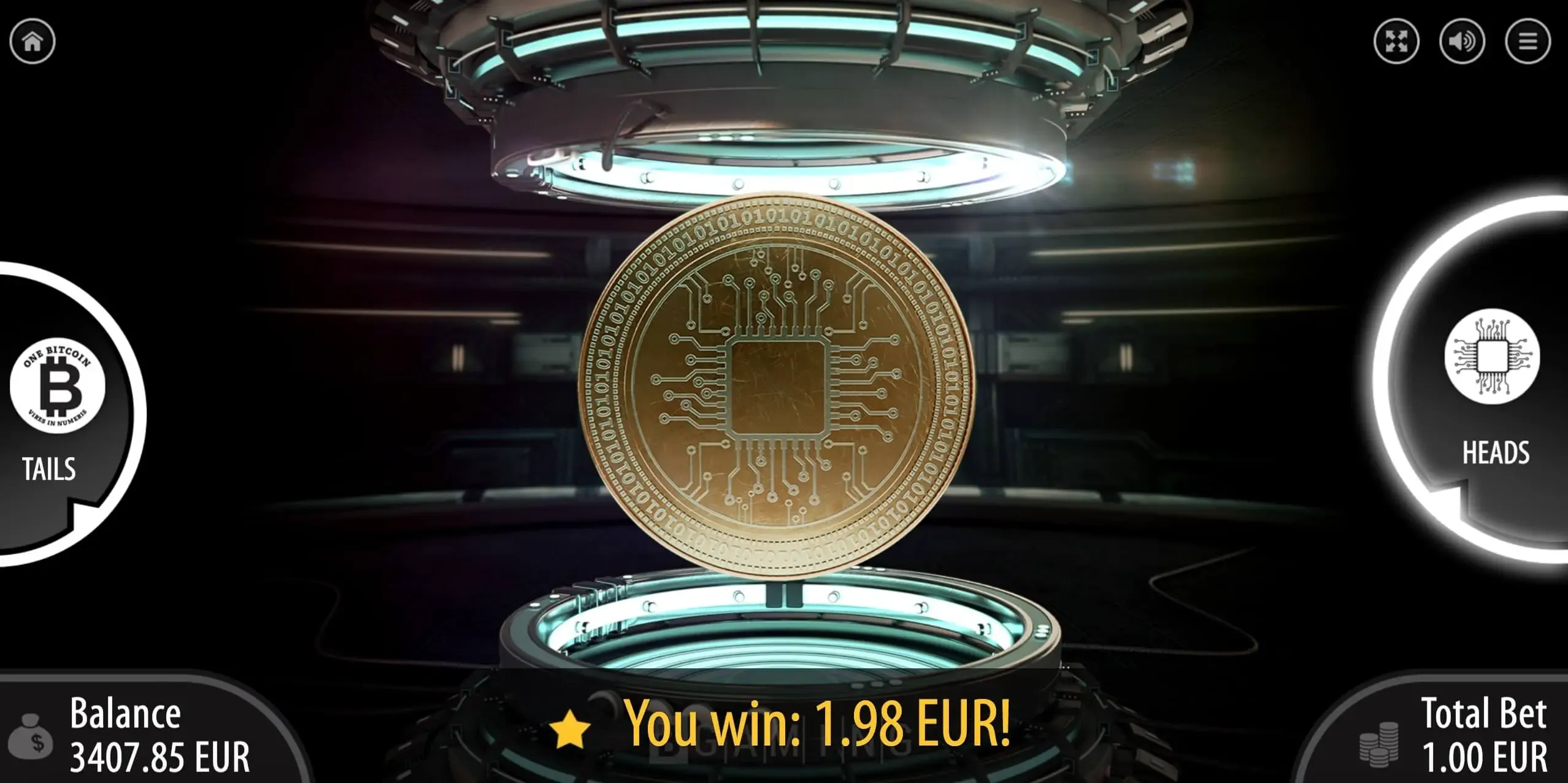
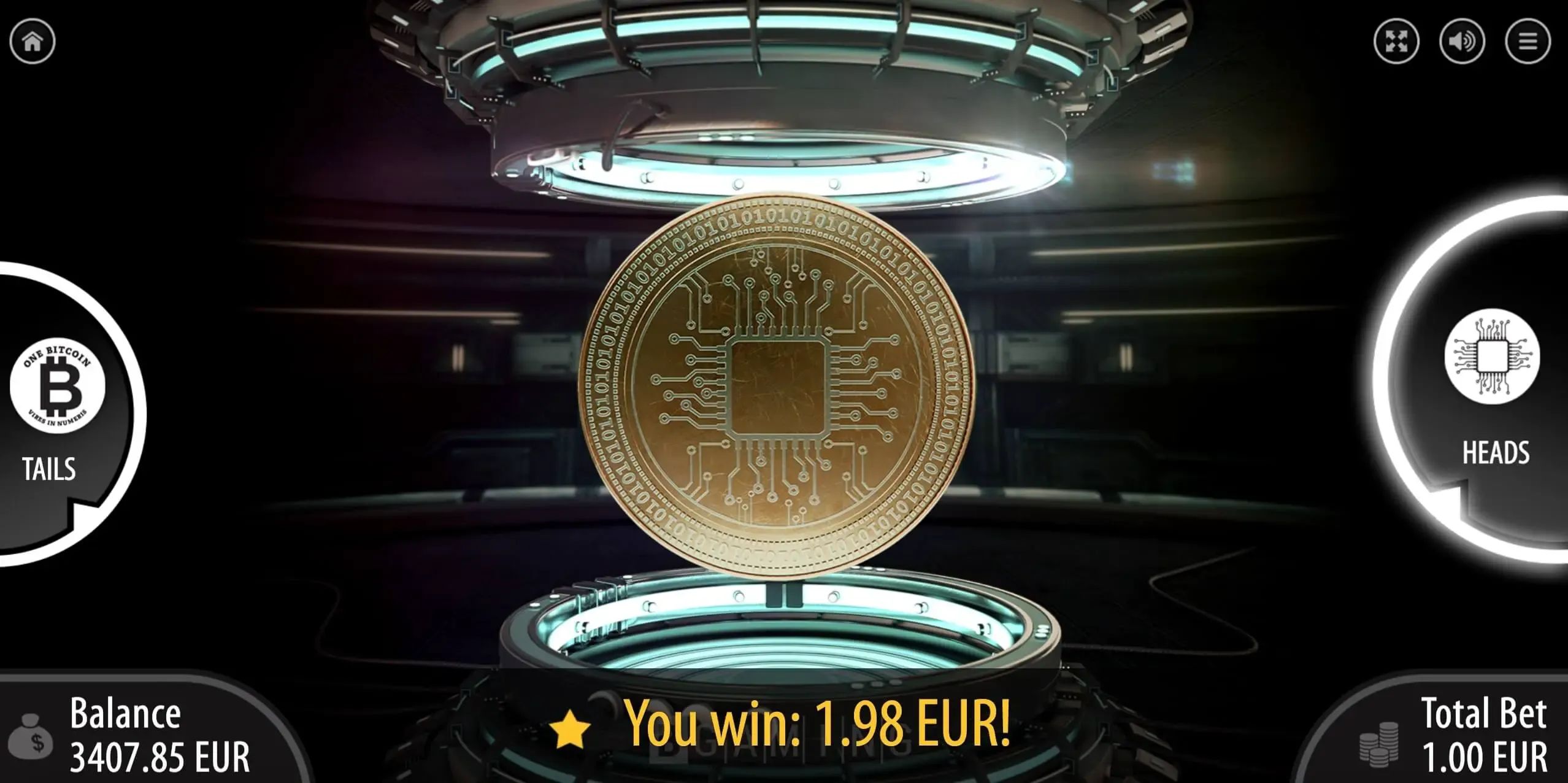
The publisher's second gameplay image shows the chip face and a 1.98 EUR win for a 1 EUR bet. It illustrates the gross-return calculation directly. It is an official promotional example, not a result from an editorial test or a suggestion that this outcome repeats reliably. The balance and currency in an illustration are separate from the limits configured in a live game.
Heads and Tails suits someone who wants a transparent, short round and no feature collection. The trade-off is equally clear: its fixed prize leaves little mechanical variety. There is no bonus meter to fill, no escalating cash-out choice and no reason to remain for an approaching feature. The official materials make no provision for a progressive jackpot or a free-spins round.
For a first look, inspect the bet setting and observe how the result and balance are presented in a demo where available. Decide a session budget before starting rather than increasing stakes to recover a previous loss. A doubling system cannot remove the house edge and can quickly run into a spending or table limit. This is a clean coin-flip format, with a small theoretical edge for the house and entirely real short-term uncertainty.
Frequently Asked Questions


