

Fortune Spin Review - RTP, Wheels and Empty Sectors
Learn How to Play
Fortune Spin - official features and review
Fortune Spin is a wheel game whose layout changes after losing spins. Its disappearing empty sectors create visible progress, but that progress belongs to a particular stake and still involves paid attempts. The main decision is which of four risk settings to use.
Written by Cryptogambler. Updated October 28, 2026.
Explore games at Cloudbet
- Explore the current games catalogue
- Availability and account terms are shown on the site
Four wheels, four different ceilings
BGaming released Fortune Spin on September 2, 2025. The official March 2026 regional report places it in Mexico's top five non-slot games. The retro wheel presentation is deliberately simple: choose a mode, set the stake and spin. There are no reels, paylines or scatter combinations to decode.
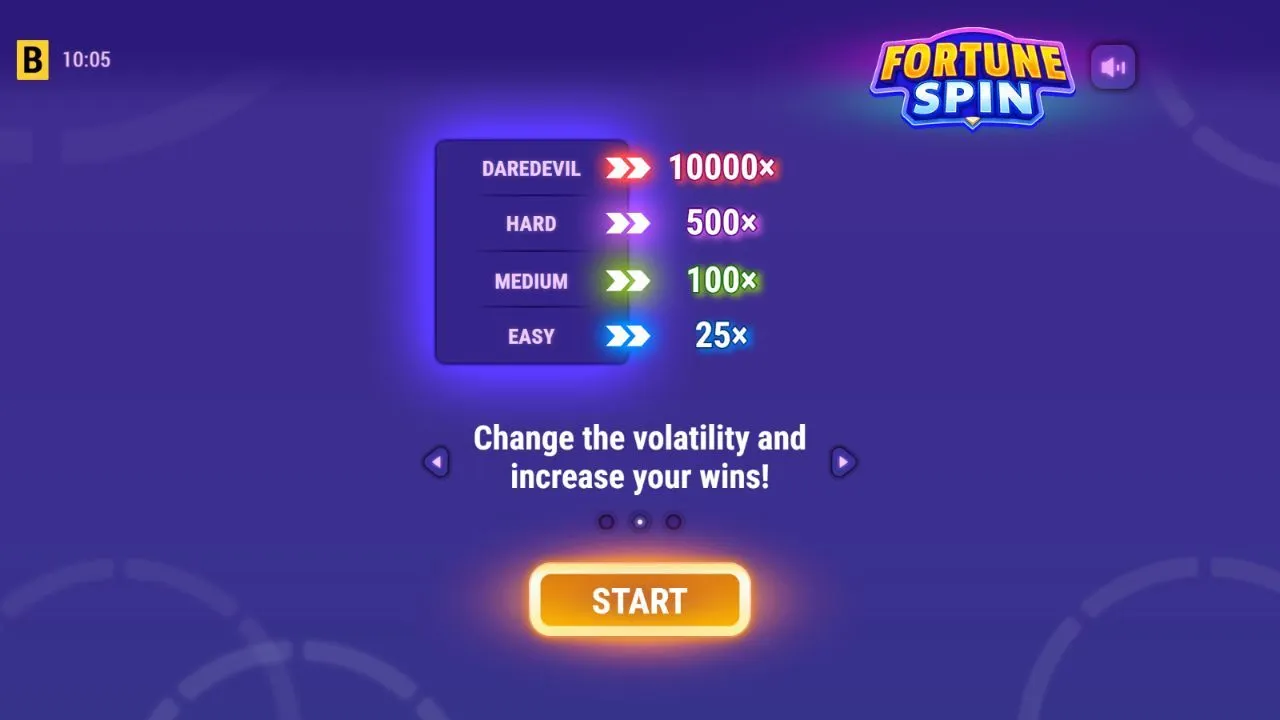
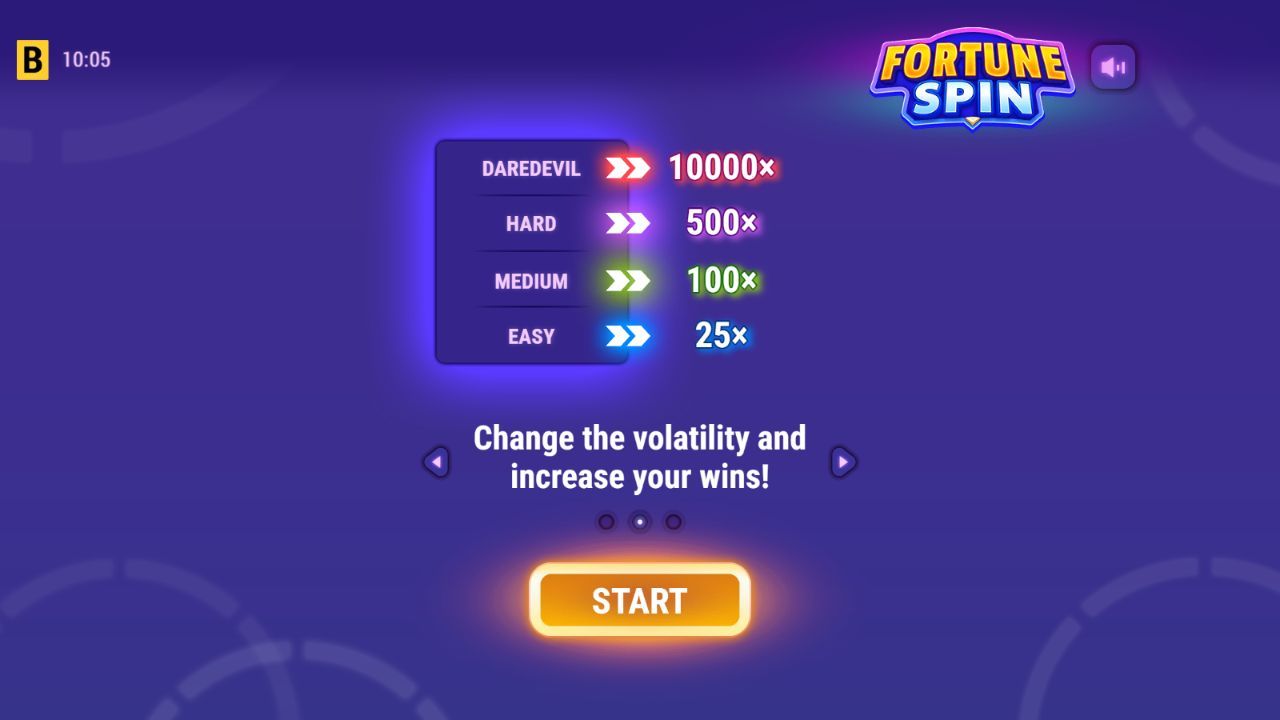
Easy, Medium, Hard and Daredevil correspond to low, medium, high and very high volatility. Their maximum multipliers are 25x, 100x, 500x and 10,000x respectively. The profile's summary label of medium volatility therefore does not describe every available wheel. Daredevil's larger ceiling is part of a different risk setting, not an upgrade that makes all ordinary outcomes better.

Empty sectors have a lasting effect
Each wheel contains multiplier sectors and empty sectors marked zero. Landing on zero produces no payout for that paid spin, but removes the sector. This changes the remaining wheel and improves the chance of reaching a multiplier on a subsequent attempt in that state. It does not reimburse the losing stake or guarantee that the next spin will win.
When a multiplier sector lands, its value is applied to the stake and the previously removed empty sectors return. The red MAX sector awards the selected wheel's maximum multiplier. Smaller winning sectors can also reset the removed sectors; progress is not a promise that the next successful result must be the red maximum.
What happens when the stake changes
The July 24, 2025 official rules explain an important detail: changing the bet restores empty sectors for the newly selected stake, while returning to the previous bet restores the progress previously made at that value. A player should therefore inspect the wheel after changing stakes instead of assuming that one universal progress bar follows every bet amount.
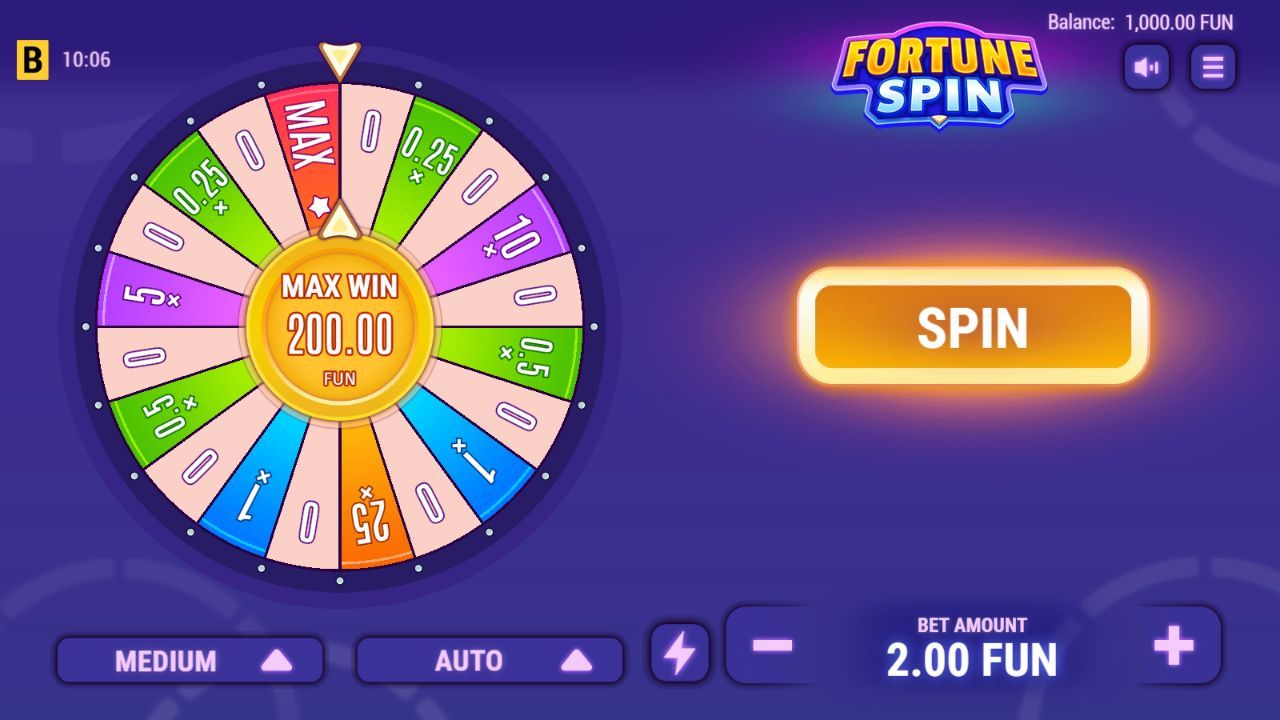
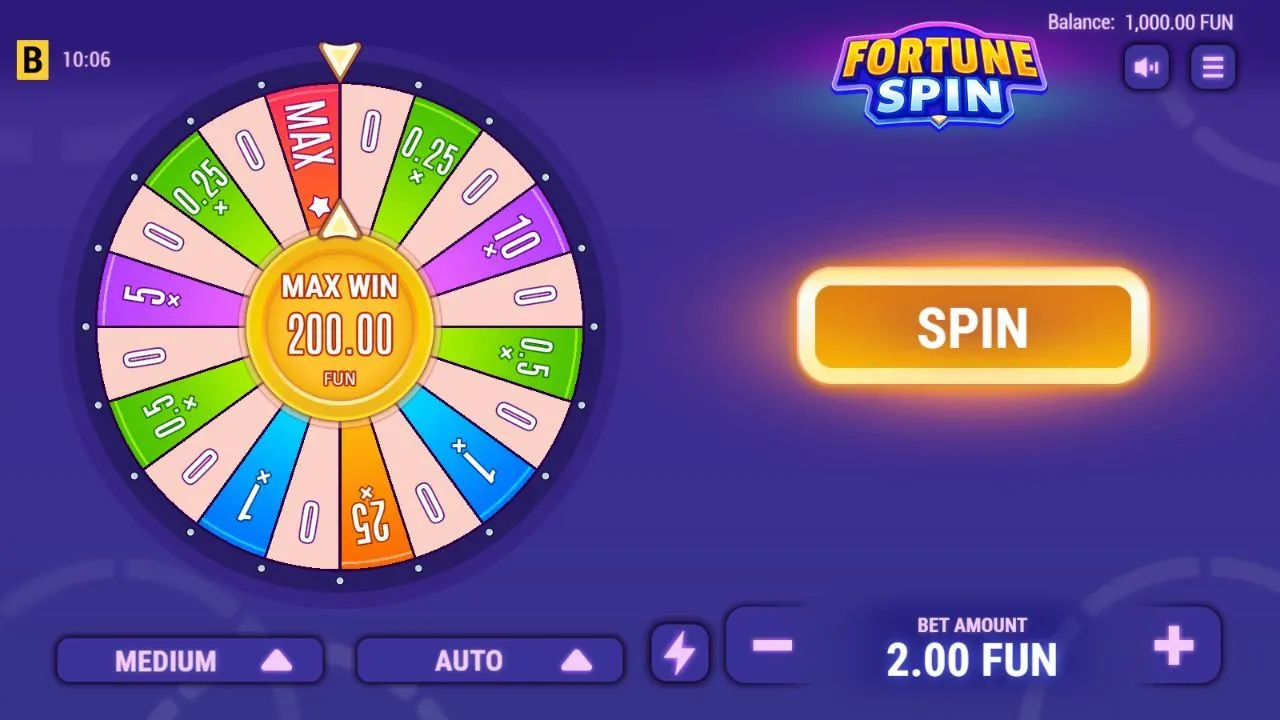
The captured official demo screen shows Medium selected, a 2 FUN stake and a 200 FUN maximum, illustrating the 100x mode ceiling. These are demonstration credits and example settings, not a real-money offer or a universal stake limit. The total maximum changes with the chosen mode and stake.
Mode selection also changes multiplier values and the proportion of empty sectors. The retrieved rules do not establish a universal transfer rule for progress between different modes, so moving from Easy to Daredevil should not be described as carrying the same wheel state into a higher-paying version. Check the displayed layout after any setting change.
RTP needs a configuration check
The public profile gives a headline RTP of 98%. However, the linked rules have separate fields for Easy, Medium, Hard and Daredevil, and the retrieved template leaves those values unfilled. That is enough to confirm the publisher's headline figure, but not enough to prove that every mode in every configuration returns exactly 98%.
RTP is a theoretical long-run measure. The visible removal of zeros does not turn the overall game into a guaranteed recovery system, and the available sources do not supply a formula for a profitable entry point. Earlier losing spins remain costs even when the wheel looks more favorable afterward.
Pace and practical limitations
Turbo speeds the presentation; autoplay can run a selected number of rounds with stop conditions, including a win or a defined balance change. These are pacing and spending controls rather than methods for improving the mathematical return. Feature availability may depend on the configuration.
Fortune Spin is strongest when the player wants an observable change after an empty result and understands the reset condition. It is less suitable for someone likely to keep paying because a partly cleared wheel feels too valuable to leave. Decide the total budget in advance, keep stake-specific progress separate from money already spent, and use the demo to compare modes before committing funds.
Frequently Asked Questions


