
Dice Million Review - RTP, Expanding Wilds and Gamble
Learn How to Play
Dice Million - official features and review
Dice Million uses dice as reel symbols in a conventional slot structure. Its two Scatter types, expanding central Wilds and optional card Gamble provide the mechanical variety. This review explains why changing its visual skin changes the appearance rather than the underlying game.
Written by Cryptogambler. Updated October 23, 2026.
Explore games at VAVADA
- Explore the current games catalogue
- Availability and account terms are shown on the site
Dice symbols inside a 100-line slot
BGaming released Dice Million on August 18, 2023. The linked rules describe five reels and three rows, while the official profile lists 100 lines, medium-high volatility and 97.34% RTP. The maximum multiplier is 3,000x. Despite the dice artwork, the game resolves reel combinations: there is no player-controlled physical throw or choice of dice trajectory.
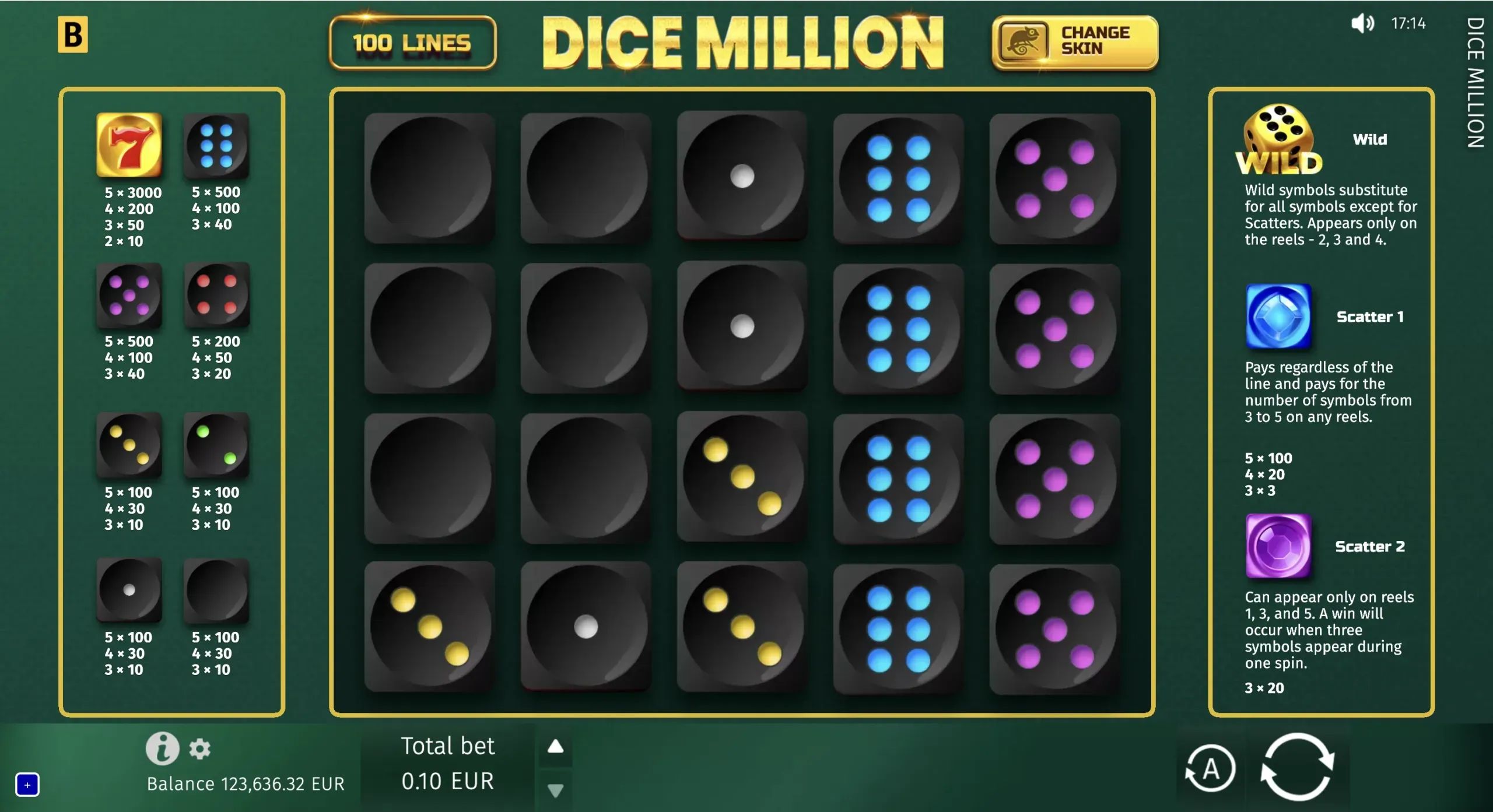
The visual language is deliberately simple. Colored pips replace fruit or character symbols, leaving room for the Wild and two Scatter designs. That makes the distinction between line symbols and special symbols more important than the apparent number shown on an individual cube. Awards follow the paytable, not the arithmetic total of all visible pips.
The 97.34% RTP comes from the current publisher profile. Its public rules contain an unpopulated RTP parameter rather than a second independent number, so the information panel remains the place to confirm the running configuration. RTP describes theoretical long-run return, not the proportion of a particular stake or deposit that must come back.
Wilds, stacks and two Scatter types
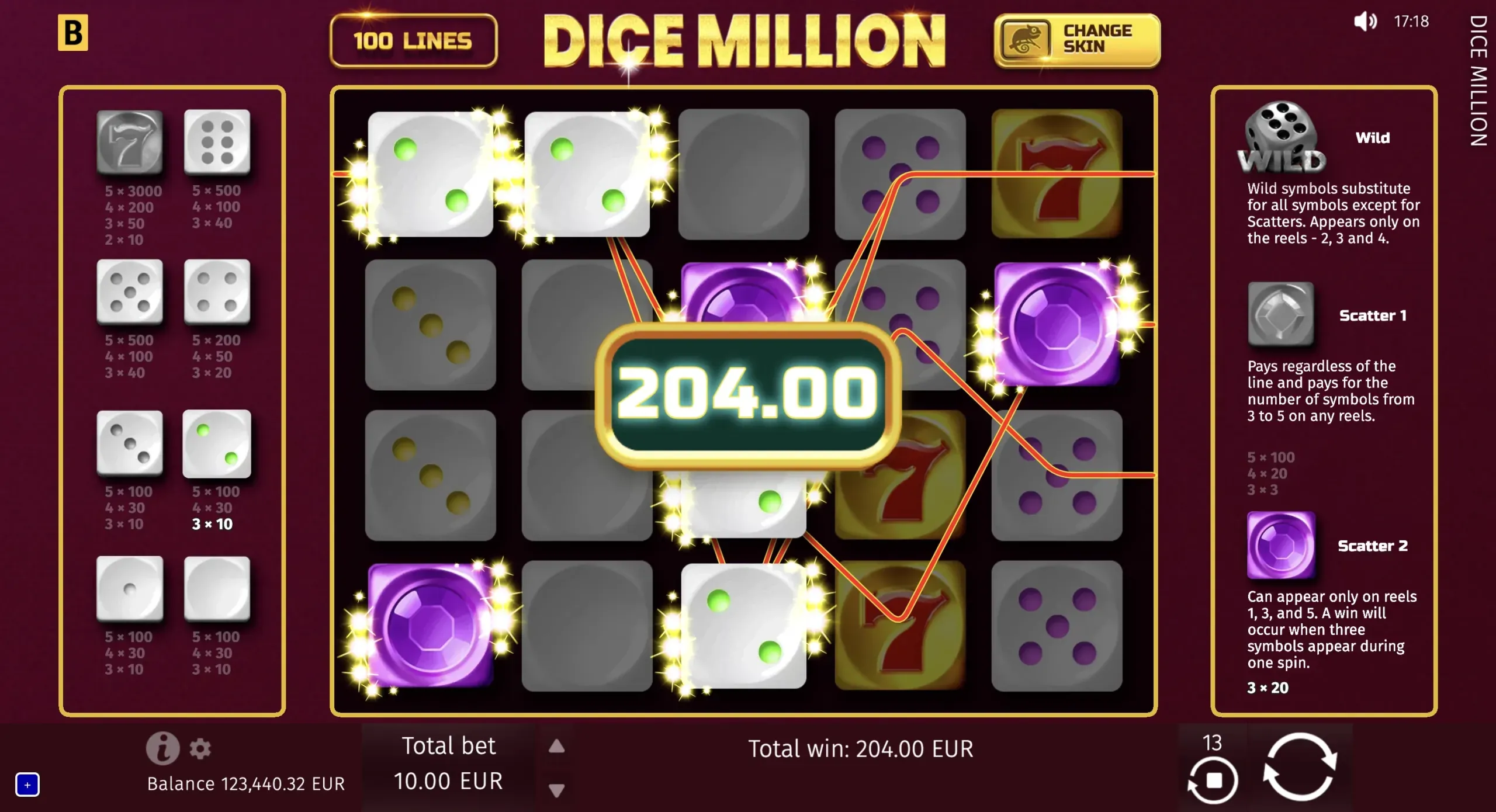
Wilds appear on reels two, three and four and substitute for ordinary symbols, excluding Scatters. An expanded Wild can cover the upper and lower cells to fill its reel. The rules tie payment to the resulting winning combination; a large Wild display alone is not proof of a paid result. Stacked symbols can cover part or all of a reel, and the official profile describes two to eight stacked symbols appearing in a spin.
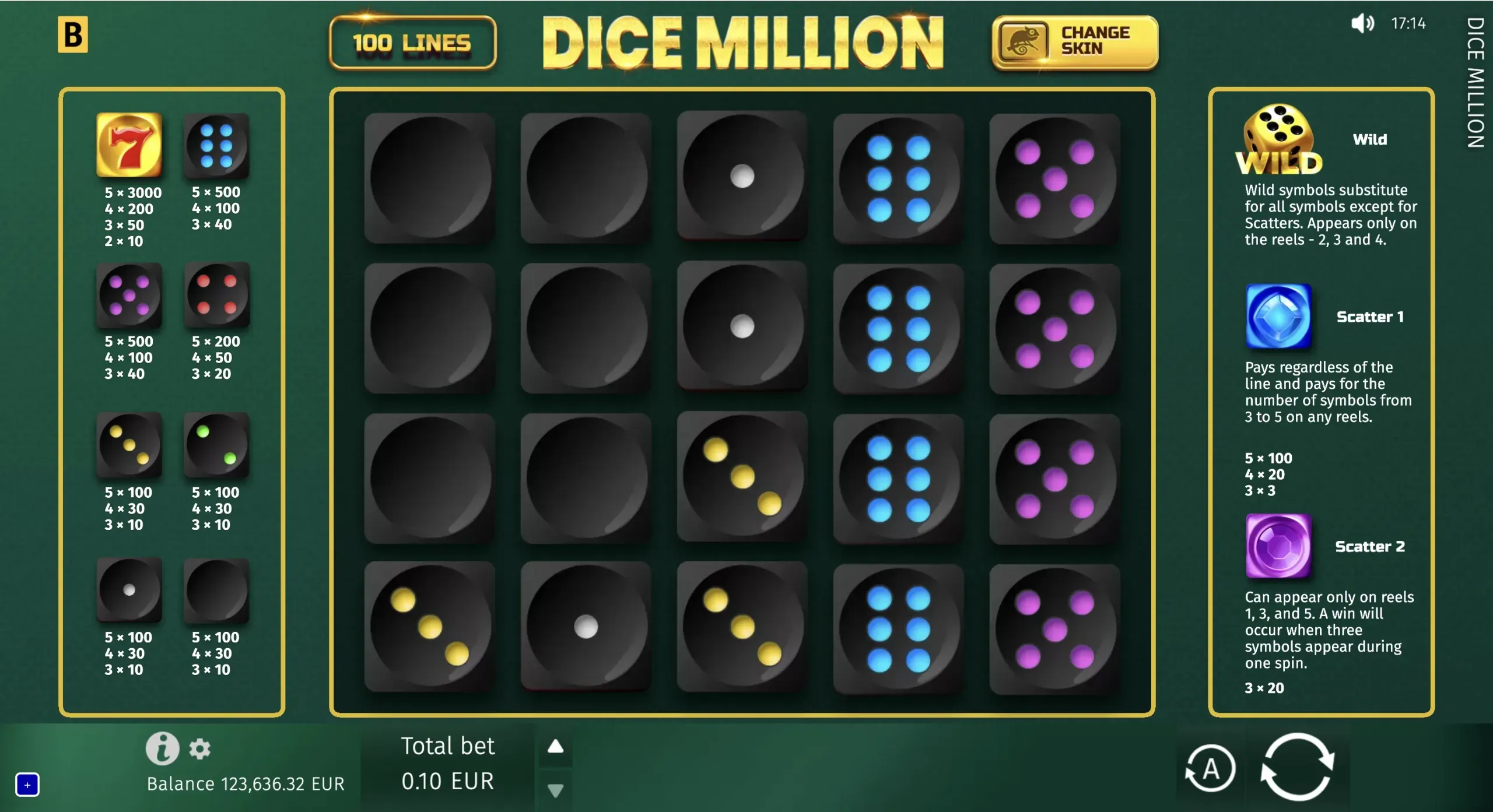
Scatter 1 pays for three to five appearances regardless of line. Scatter 2 is restricted to reels one, three and five, with all three required in one spin for its payment. A Scatter payment can be added to a simultaneous ordinary line win. These are two different pay-anywhere conditions, not a shared count of interchangeable Scatter symbols.
A skin switch changes the picture
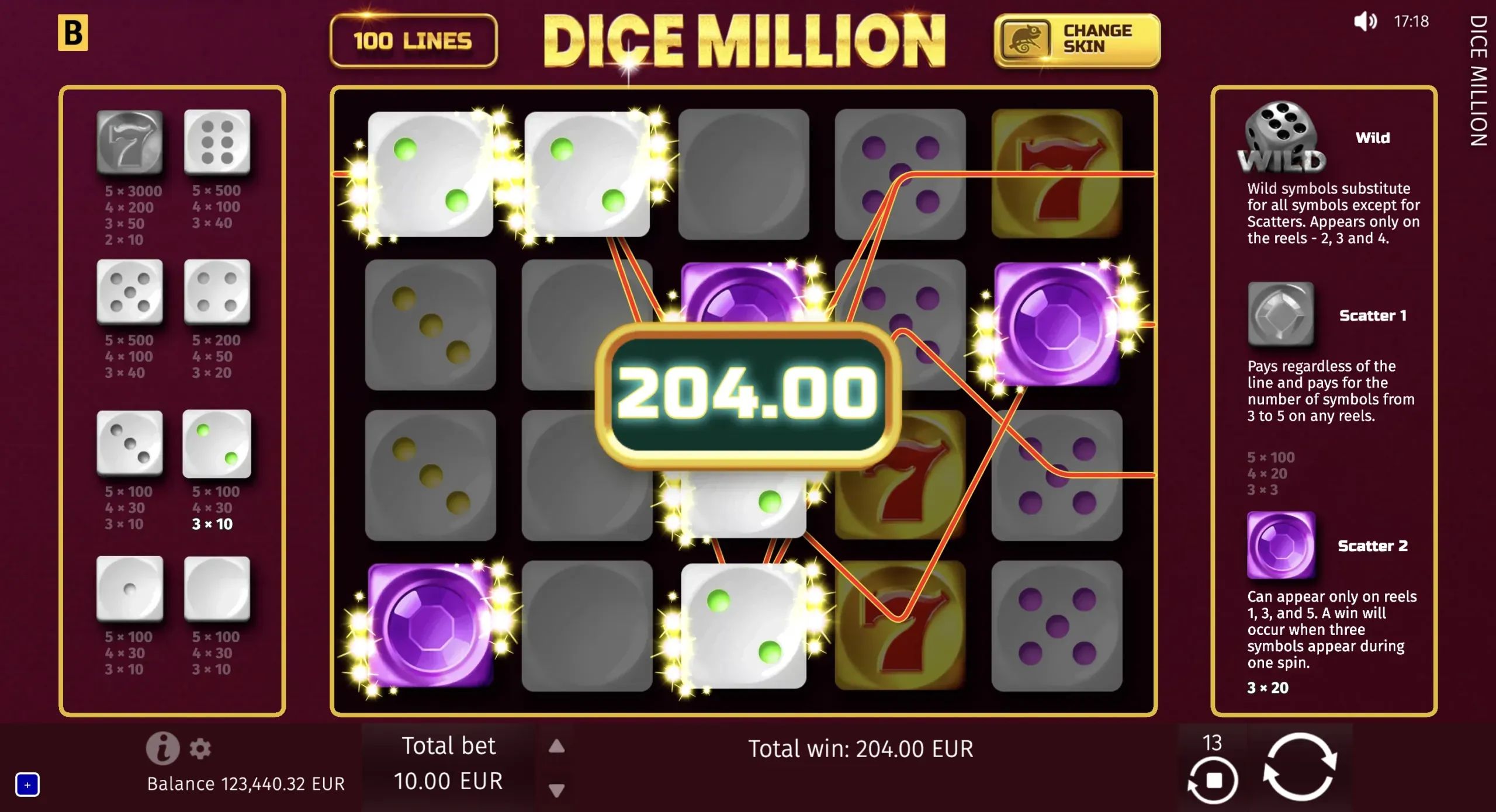
The Chameleon control offers red, white and black visual styles. Symbols may look different after a switch, but the official rules explicitly preserve functionality, features and paytable. Changing to a new color therefore does not reset the mathematics or establish a better chance after losses. It is a presentation preference, useful for choosing a clearer-looking field rather than searching for a more favorable skin.
The optional card Gamble
After a base-game win, the Gamble option can use that win as the stake for a card prediction. A correct color doubles it; a correct suit multiplies it by four. A losing guess ends the Gamble and the amount put at risk is lost. This is a separate risk decision after a win, not a free enhancement of a settled payment.
The rules allow collecting a successful Gamble result rather than continuing. They also describe limits on the feature, including a quarter-of-maximum-win threshold and a check on the potential next win. Those controls are reasons to read the active help panel, not to assume that repeated guesses can continue indefinitely. A bigger displayed win does not make the next prediction more likely to succeed.
Dice Million's appeal is its compact set of reel features and an appearance that can be changed without learning another paytable. Its optional Gamble is also the clearest point where an already won amount can be exposed to another loss. Players who prefer to keep a reel payment can collect instead of selecting that option.
Before starting, check the total stake, actual symbol table and enabled controls. Neither a different skin nor a previous expansion changes a random future result. The published 3,000x maximum is a ceiling for the game, not the expected value of a winning screen, and the official promotional images should be read as feature illustrations rather than a record of typical returns.
Frequently Asked Questions


