

Chicken Rush Review - RTP, Sticky Boxes and Bonus Modes
Learn How to Play
Chicken Rush - official features and review
Chicken Rush earns its place through a bonus that changes the purpose of the reels. Instead of paying each free spin, it asks you to uncover boxes and accumulate one selected symbol for a final payout. I would recommend it to players who enjoy collection features and a clear contrast between the main game and the bonus.
Written by Cryptogambler. Updated October 19, 2026.
Explore games at Cloudbet
- Explore the current games catalogue
- Availability and account terms are shown on the site
A Western slot with a different bonus rhythm
BGaming released Chicken Rush on May 15, 2024. Its three rooster sheriffs and dusty Western town provide the theme, while the official profile lists a 97% RTP, medium-high volatility and a maximum multiplier of 5,000x. These are game specifications, not an estimate of what a particular session will return.

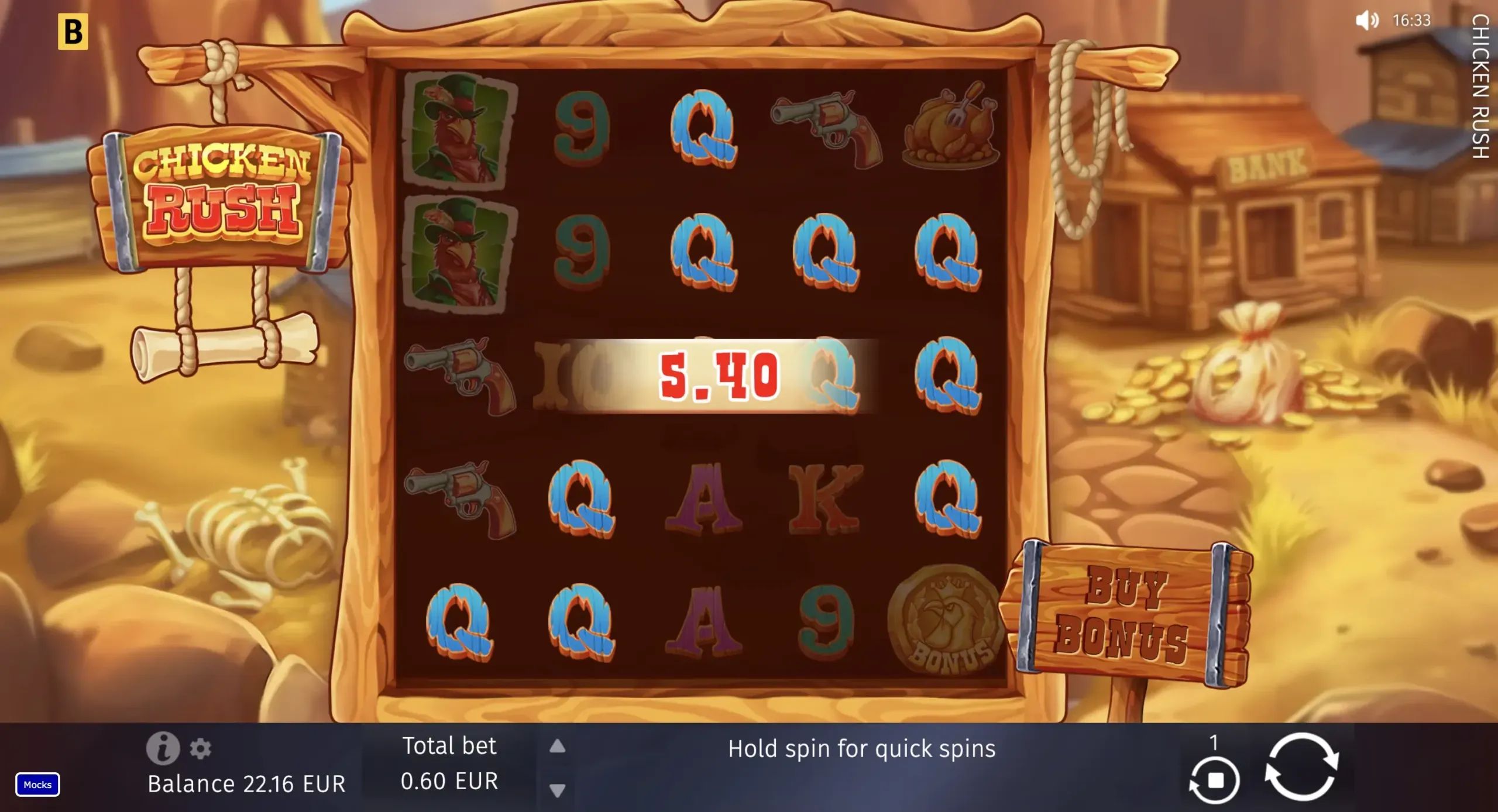
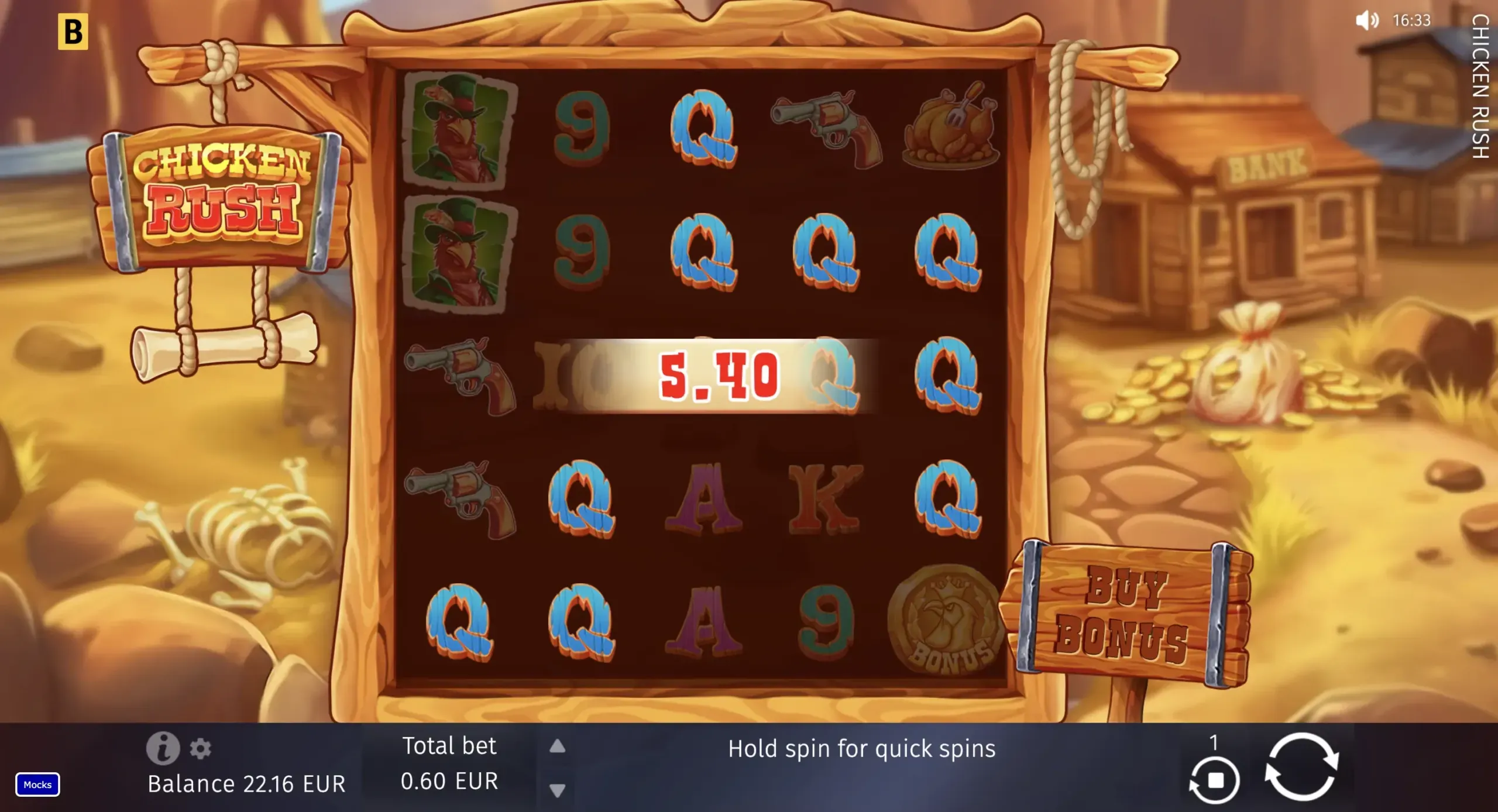
The main game uses matching symbols on consecutive reels from left to right. Wilds help complete combinations and carry random multipliers of 2x, 3x, 5x or 10x. They substitute for ordinary symbols but not the Bonus symbol. These multiplier Wilds belong to the main game; the collection system in the bonus has its own rules.
The layout deserves a version caveat. The current profile's details list 243 ways, while the linked version 1.0 rules and publisher introduction screen describe a changing-reel format with up to 3,125 ways. I would read the paytable in the launched version for its exact reel configuration. The two official sources agree on the central box-collection feature, its trigger and purchase modes.
How the boxes and sticky symbols work
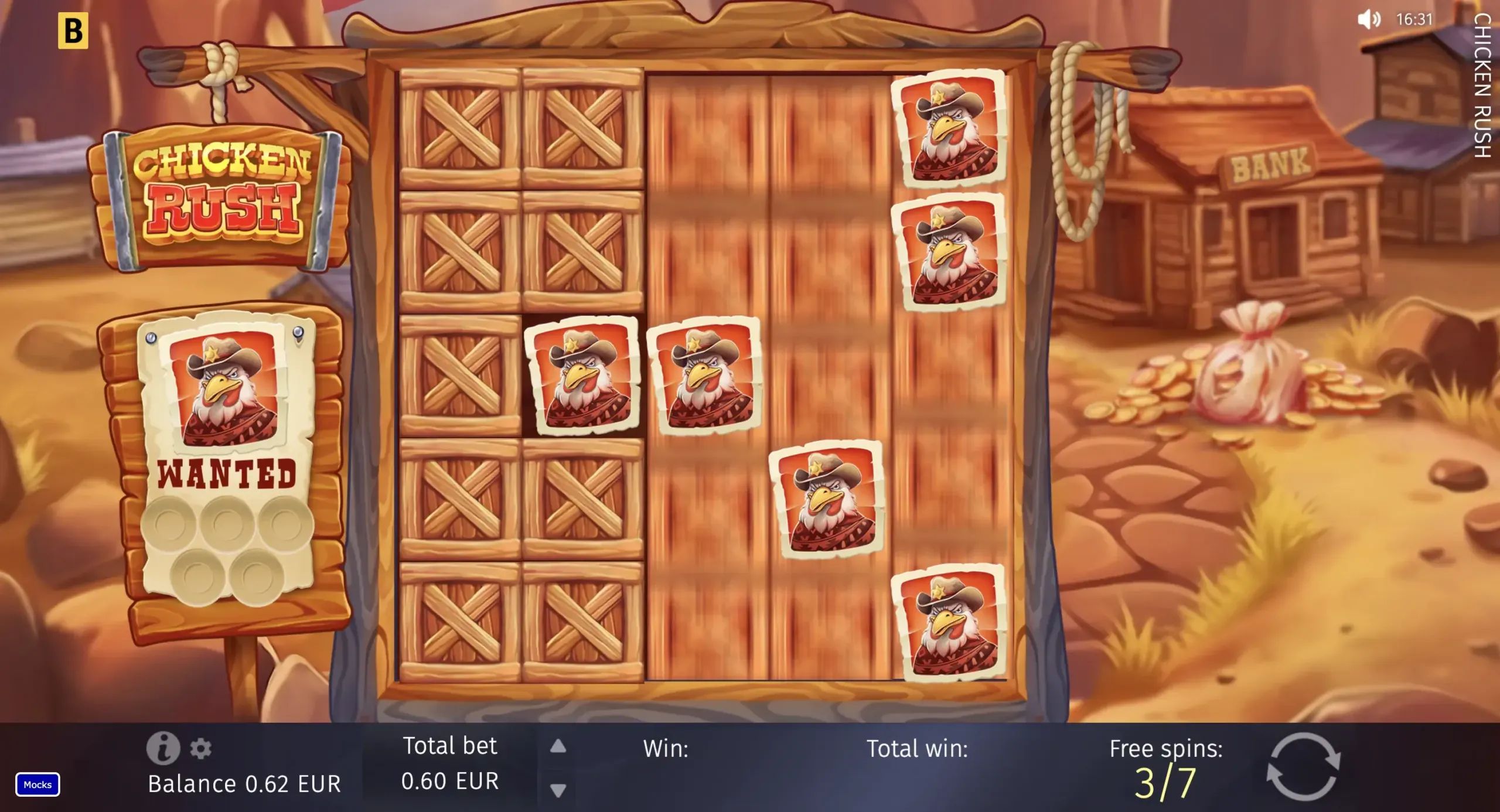
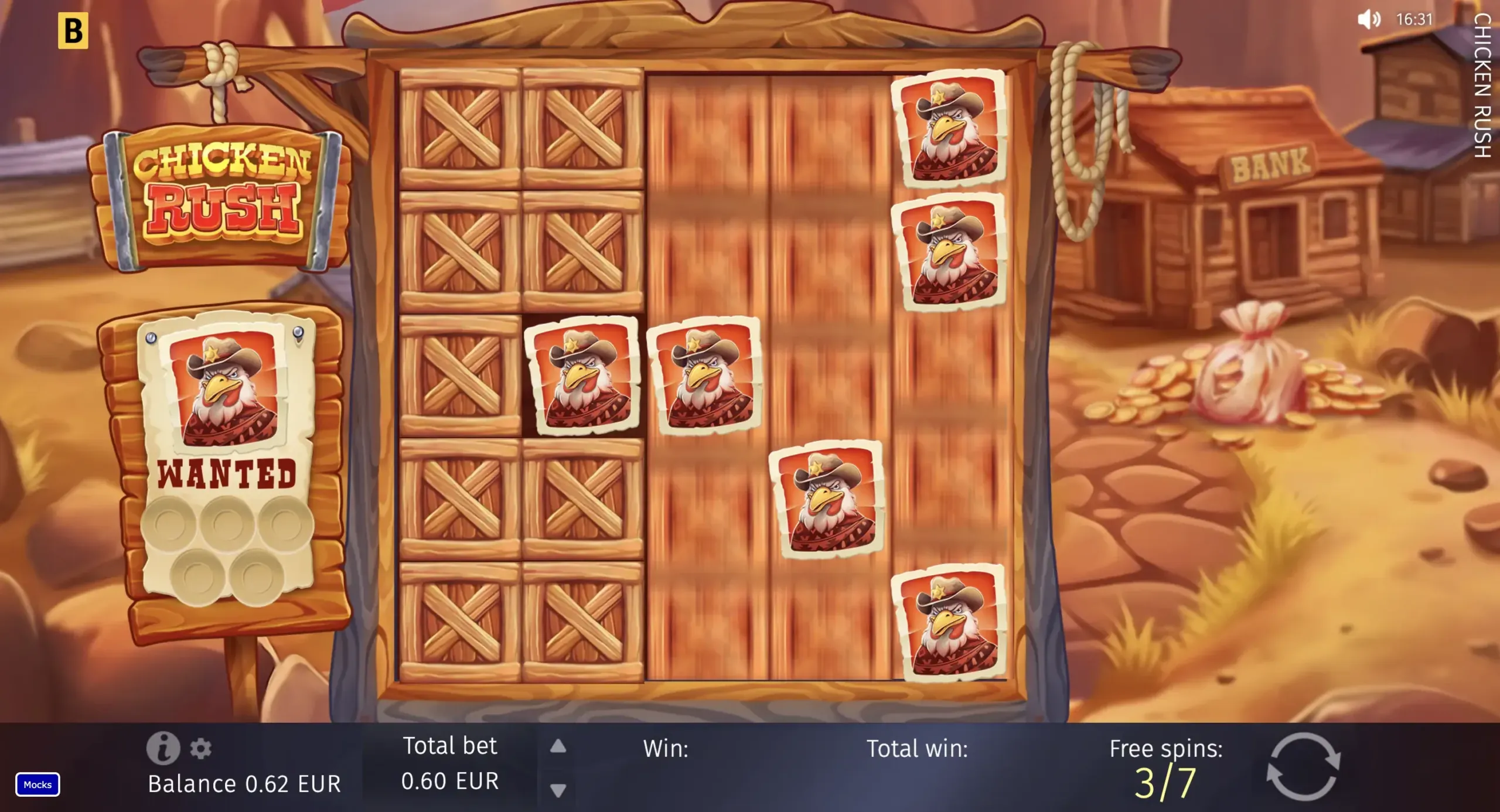
Three Bonus symbols trigger five free spins, four trigger seven, and five trigger ten. At the start of the round, one ordinary symbol is selected at random. The game then fills the reels with wooden boxes, and spins can reveal the selected symbol, an extra spin or a multiplier.
Revealed copies of the chosen symbol become sticky and remain in place until the round ends. A +1 free-spin reveal extends the remaining opportunity to collect. The key difference from a conventional free-spin game is settlement: the bonus calculates the award after the round has finished, rather than paying a separate symbol win on each spin.
Multiplier reveals are collected in a separate area. Five must be collected to activate them. The published values are 2x, 3x, 5x and 10x, and the feature uses them with the collected symbols when determining the final award. Collecting a few multiplier icons is therefore not the same as completing the activation requirement.
This is the part I would watch closely in a demo: the number of sticky symbols, the remaining spins and whether the multiplier collection reaches five. Those three pieces of information explain the state of the round much better than the animation of the sheriffs shooting boxes. They also make the waiting period before the final settlement easier to follow.
Bronze, Silver and Gold explained
Chicken Rush offers three paid routes into its bonus. Bronze is the standard round with a randomly chosen symbol. Silver restricts that selection to the higher-paying symbols. Gold uses the Silver structure and doubles the number of multipliers when the five-multiplier collection is completed, giving ten multipliers.
These options change the feature setup; they are not three guaranteed payout bands. Their prices differ and adjust with the selected bet. A promotional screenshot records one example configuration, so its currency amounts should not be treated as a universal purchase price for every version or stake.
My verdict is positive for players who want a recognizably different collection bonus. The main-game Wilds provide a separate source of interest, while Silver and Gold offer clearly stated changes to the feature. The compromise is delayed settlement and medium-high volatility: a nearly completed collection can still finish below expectations.
Use the desktop or mobile browser demo to see a full round before assigning a real-money budget. Keep purchases inside that budget and avoid raising the stake to recover an unfinished collection. Source basis: BGaming's current game profile, linked ChickenRush rules and official publisher media.
Frequently Asked Questions


