

Chicken Road 2 Review 2026 - RTP, Demo, Rules and Limits
Learn How to Play
Chicken Road 2.0 - four difficulty modes and player-controlled cash-out
Chicken Road 2.0 is a single-player instant game with 95.5% RTP, four risk settings and rising multipliers on every safe crossing. The official rules list bets from $0.12 to $200 and a $20,000 maximum win.
5BET
- InOut Games and Chicken Road are listed in the catalogue
- Deposit C$20 or crypto equivalent for 100 no-wager free spins
How Chicken Road 2.0 Works
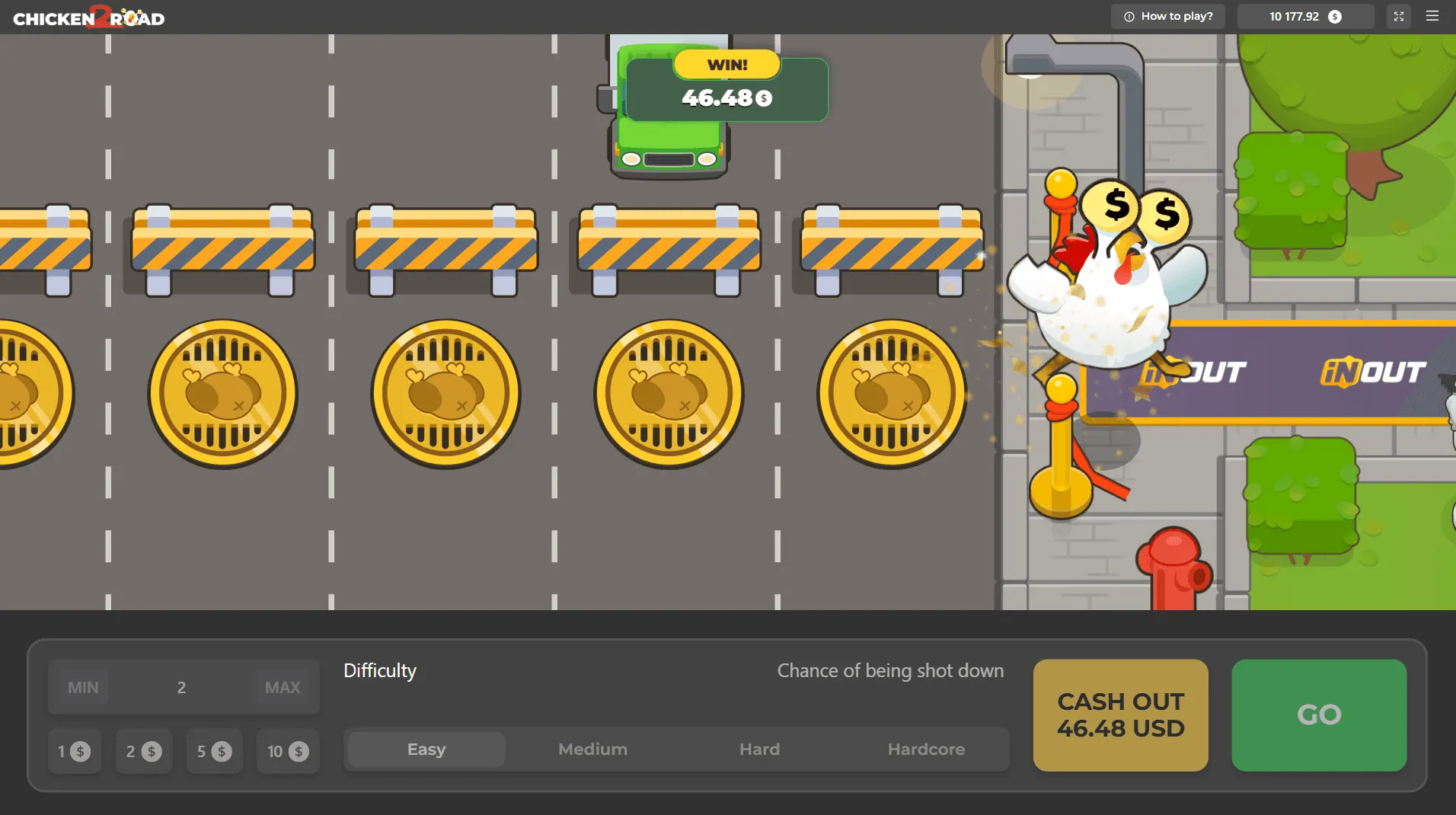
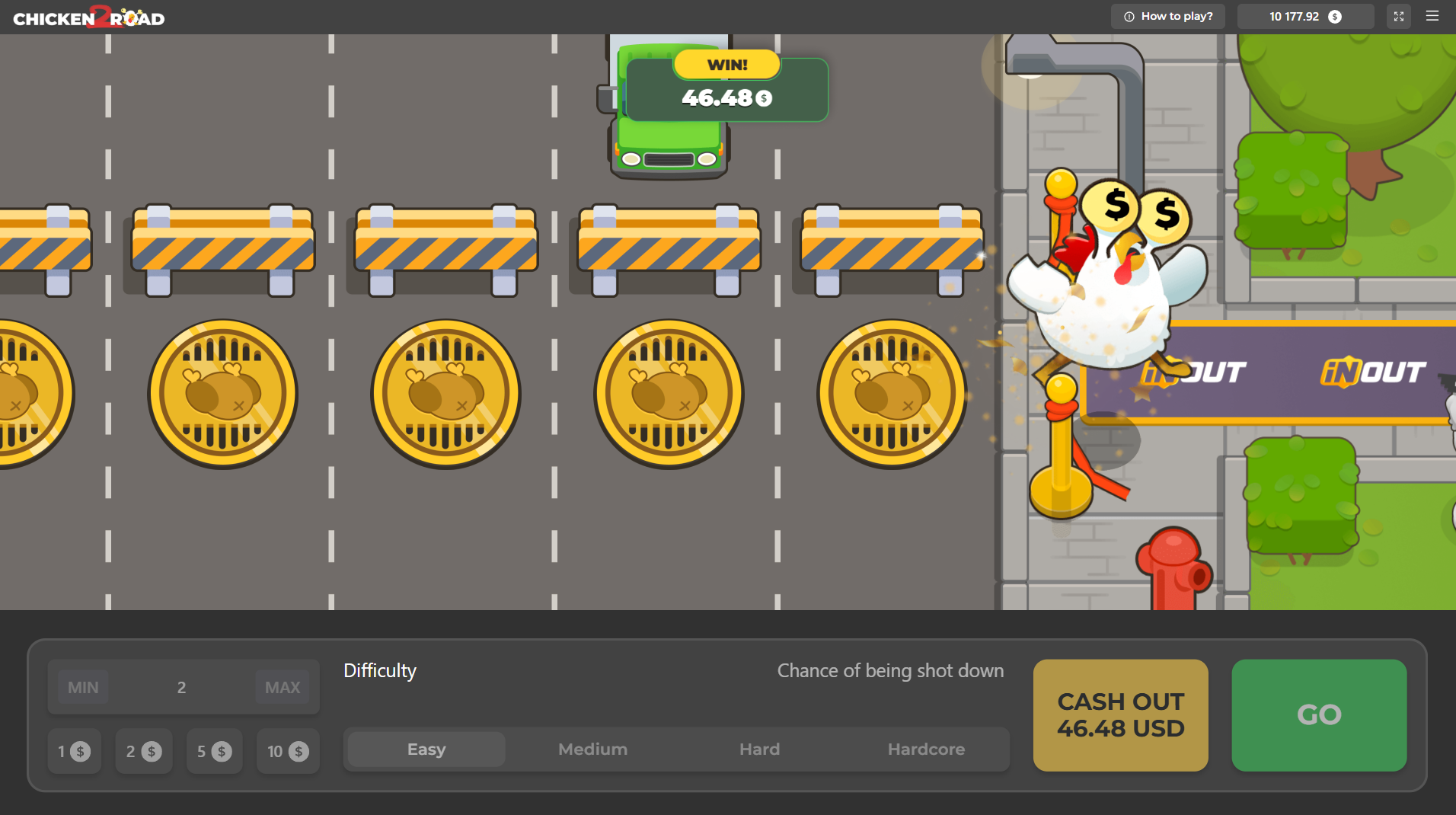
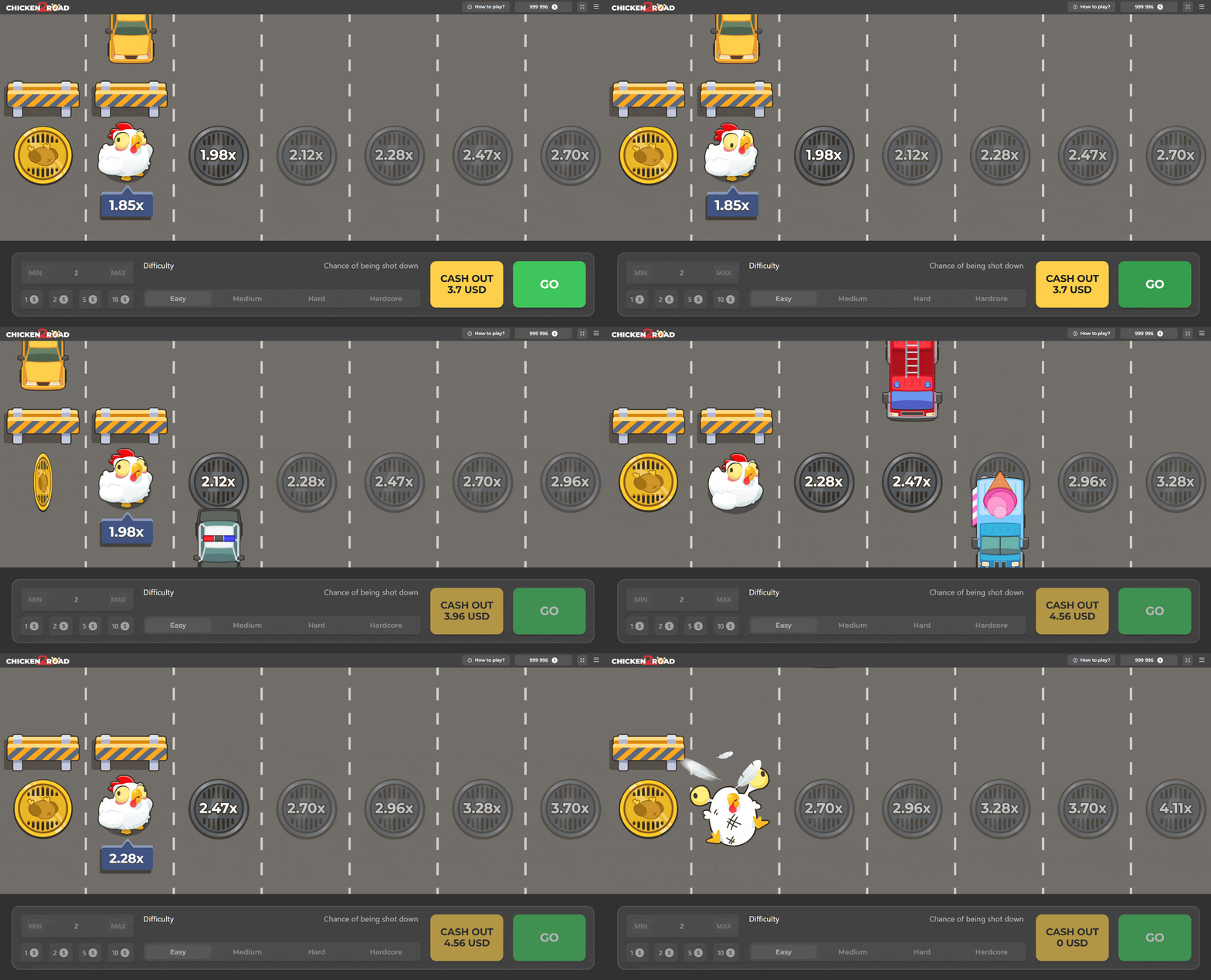
Chicken Road 2.0 turns a simple road-crossing idea into an instant cash-out game. You choose a stake and one of four difficulty modes, then press Go to move the chicken across one road line. A safe crossing raises the multiplier and presents the same decision again: collect the current amount or risk another step.
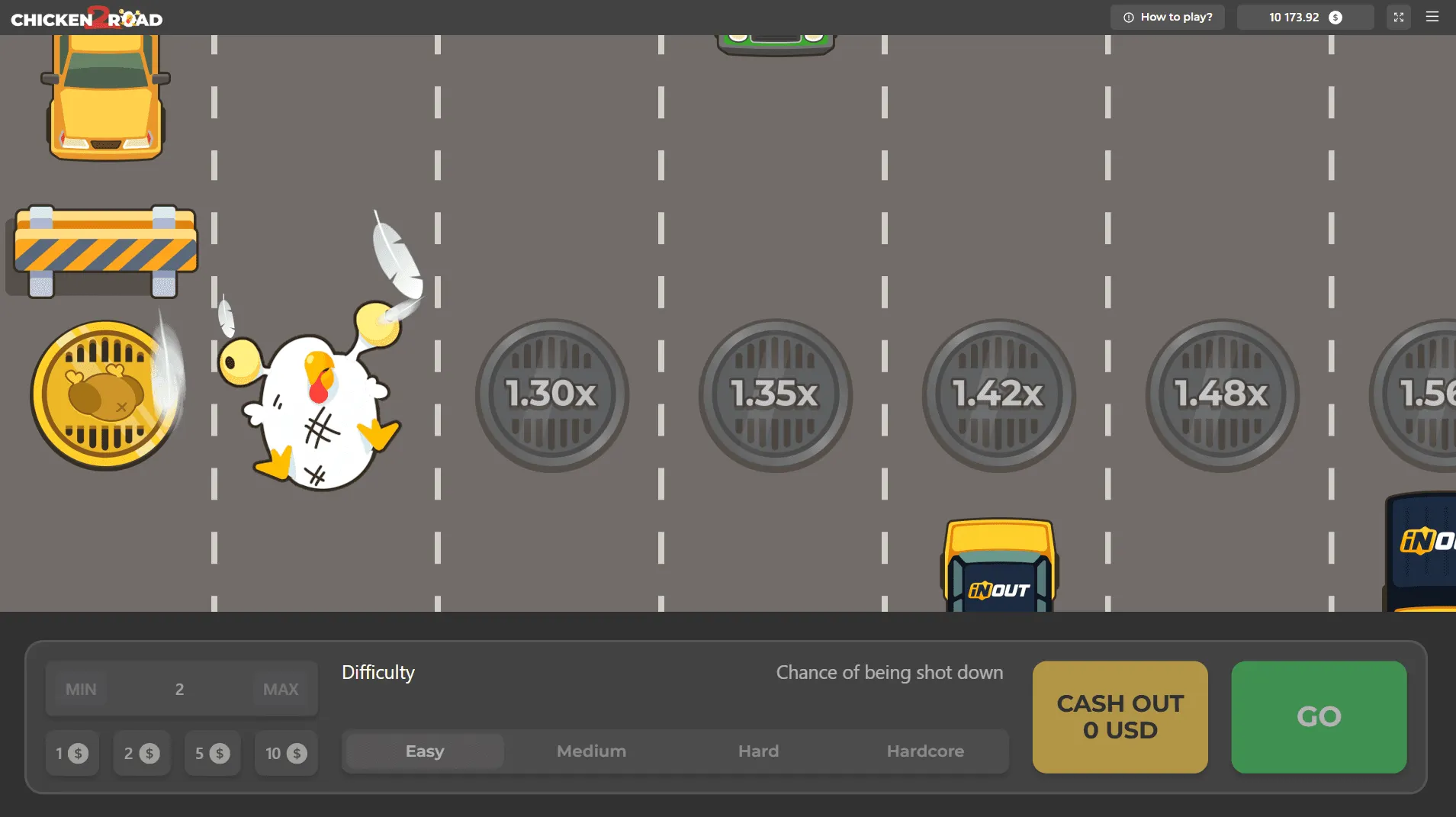
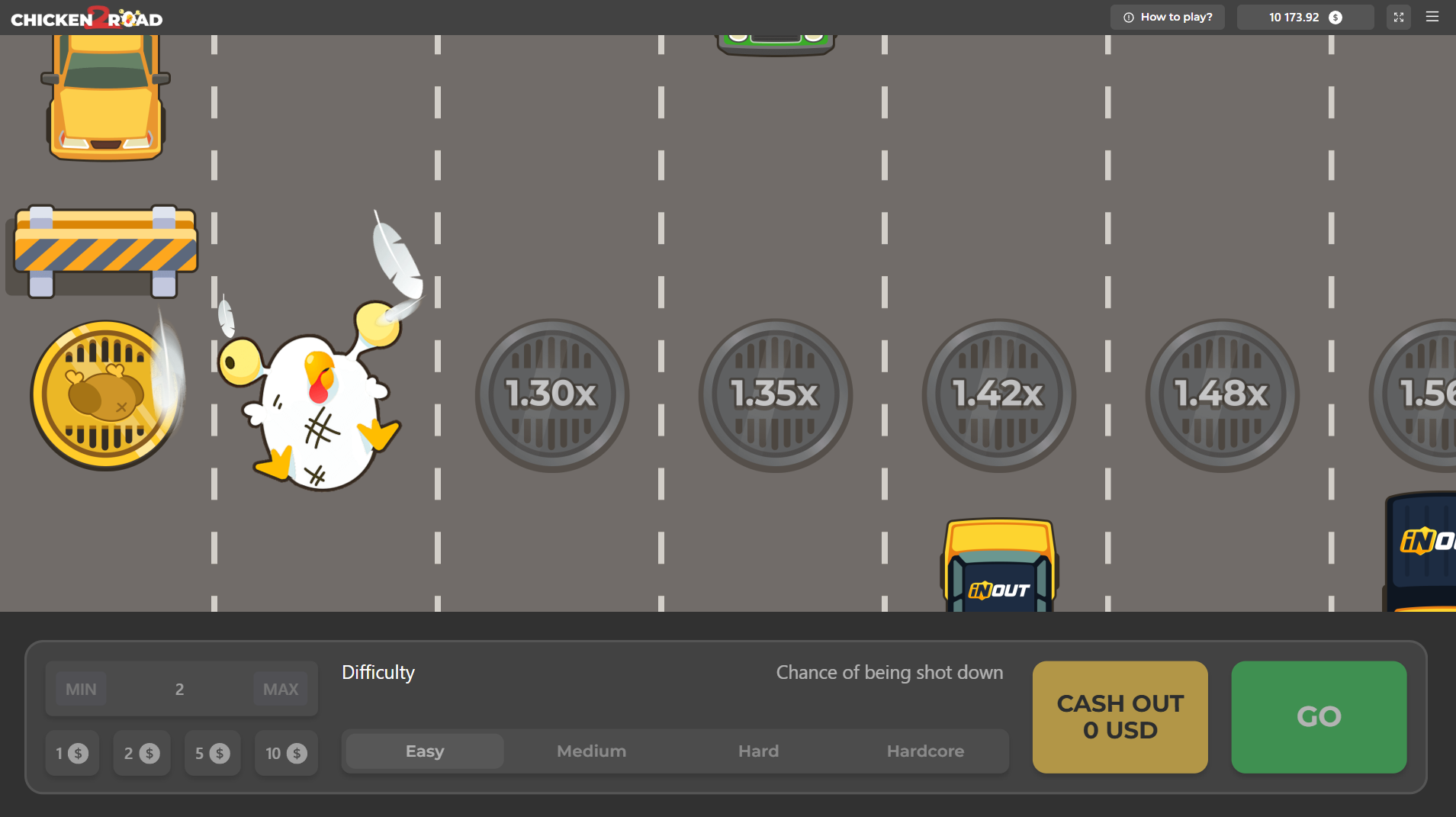
If a vehicle hits the chicken before cash-out, the round ends and the stake is lost. If you press Cash Out after a safe move, the displayed value is credited and the round closes. There are no reels, paylines or bonus symbols. The entire game is built around the tension between a growing multiplier and the risk attached to the next crossing.
The Four Difficulty Modes
The official instructions divide the road into four modes:
- Easy - 30 road lines
- Medium - 25 road lines
- Hard - 22 road lines
- Hardcore - 18 road lines
The number of lines is not the only difference. The chance of being hit increases with difficulty, so harder modes compensate for shorter, riskier routes with faster multiplier growth. Easy gives the longest sequence and the smallest changes between early steps. Hardcore compresses the run into fewer decisions and makes every successful move more valuable.
This makes difficulty a risk setting rather than a test of reaction speed. The player does not steer between cars. Each press resolves a probability-based step, and the main decision is whether the next multiplier is worth the possibility of losing the current round value.
Starting a Round
The interface keeps the full setup in one place. Enter a stake, select Easy, Medium, Hard or Hardcore and press Play. After the round starts, the button changes to Go and the current cash-out amount appears beside it. A successful move updates the value immediately.
The first few rounds are easiest to understand at the minimum stake. This shows how the multiplier changes in each mode without making the lesson expensive. Switching difficulty during an active round is not part of the decision. The selected risk profile applies to that run from the start.
RTP, Bet Limits and Maximum Win
The official Chicken Road 2.0 page lists an RTP of 95.5%. RTP describes the theoretical average returned across a very large number of bets. It does not mean that every $100 session returns $95.50, and it does not make a loss more likely to be followed by a safe crossing.
The official rules panel shows:
- Minimum bet - $0.12
- Maximum bet - $200
- Maximum win - $20,000 per round
The payout cap matters when a high multiplier is reached with a large stake. The displayed multiplier can continue to describe the progression, but the cash result cannot exceed the configured $20,000 maximum for one round.
Multipliers and the Cash-Out Decision
Every safe road line increases the multiplier applied to the original stake. The road therefore works like a visible ladder: the amount available now is certain only after Cash Out, while the next step offers a larger value with a new chance of ending the round.
The most useful comparison is not between the largest possible multipliers. It is between the amount already available and the extra return offered by one more crossing. A player who repeatedly aims for the final line accepts much more exposure than someone who sets a fixed cash-out target before pressing Play.
The game displays the current cash value, not just the multiplier. That is a good design choice because it shows the actual amount at risk before every Go decision. It also makes changes in stake size immediately visible.
Easy Versus Hardcore
Easy mode suits players who prefer a longer progression with smaller early increases. Hardcore is the opposite: fewer lines, sharper multiplier growth and a higher chance of losing on each move. Medium and Hard sit between those two extremes.
No mode changes the published 95.5% RTP into a guaranteed advantage. Difficulty changes the shape of the experience - how often rounds can continue and how quickly the potential payout rises. The right mode is therefore the one that matches the planned session length and tolerance for short losing rounds.
Provably Fair Controls and Round History
The menu includes provably fair settings, personal bet history and game rules. Provably fair verification allows a completed result to be checked against the cryptographic inputs used to generate it. It is an audit tool, not a way to predict the next vehicle or road crossing.
Bet history is useful for checking stakes, cash-outs and completed rounds. It should not be used as a pattern finder. Each new crossing is resolved independently, so a sequence of losses does not make the next step safer.
Mobile Play and Controls
Chicken Road 2.0 runs in an HTML5 browser layout. On desktop, the road occupies most of the screen while the stake, difficulty selector, cash-out amount and Go button remain in a fixed control panel. The mobile version uses the same core flow without requiring an unofficial APK.
Keyboard users can enable the Space option to move forward. The on-screen Go button remains the clearer choice on touch devices because it keeps the action deliberate. Cash Out is separate from Go, reducing the chance of confusing another crossing with the decision to collect.
A Practical Way to Play the Demo
Start in Easy mode at the minimum stake and make only a few crossings before cashing out. Then repeat the same approach in Medium, Hard and Hardcore. This makes the difference in multiplier pace and round survival visible without focusing on one lucky result.
A simple session plan can be built around three limits:
- a fixed stake that does not increase after a loss
- a cash-out target chosen before the round
- a maximum session loss or time limit
These limits do not improve the mathematical RTP, but they stop the game from turning one failed run into a sequence of larger recovery bets.
Final Verdict
Chicken Road 2.0 is easy to read and quick to play. Its best feature is that every meaningful number stays visible: stake, difficulty, current cash-out value and the next decision. The four modes give the same core mechanic noticeably different pacing, from the longer Easy road to the compressed Hardcore run.
The trade-off is equally clear. Progress creates a larger payout only while the next crossing remains unresolved. Players who enjoy making repeated risk-versus-reward decisions will find more depth here than the cartoon presentation suggests. Players who prefer fixed outcomes with no mid-round choice may find the constant cash-out decision less comfortable. The official demo is the right place to compare all four modes before using real funds.
Frequently Asked Questions


