
What Is Blackjack, Rules and History of the Game
Learn How to Play
What Is Blackjack, Rules, History.
Whenever someone asks me which casino game feels the most honest, blackjack is usually my answer. And not because it is easy, not because it is safe, and definitely not because the casino suddenly becomes generous. In fact, it is quite the opposite.
Blackjack is one of the very few casino games where your decisions genuinely influence the outcome. Not completely, but enough to create a real difference between random play and informed play. I have spent years testing casino games across both online platforms and real casino floors, and over time the differences between them become very clear. Slots are entirely passive, you press a button and wait. Roulette is pure probability, where everything is decided in a single moment. Baccarat feels elegant and structured, but in reality offers very little control once the bet is placed.
Blackjack stands apart.
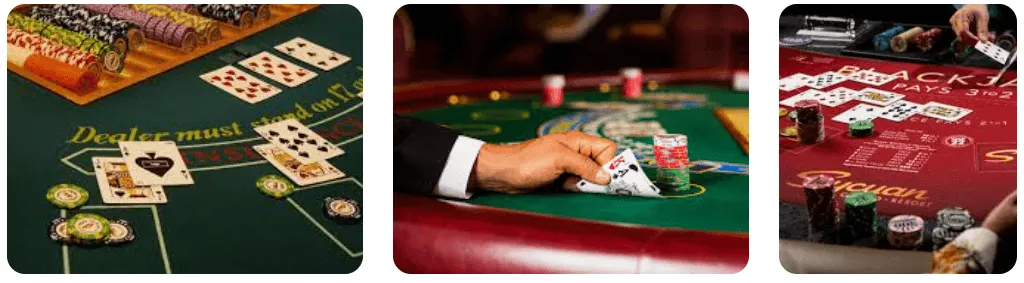
It gives you something the other classic games usually do not, room to think, analyze, and make decisions that actually matter. That balance between simplicity and control is exactly why the game has survived for centuries. And it is also the reason so many players misunderstand it. At first glance, blackjack looks straightforward. Get as close to 21 as possible, beat the dealer, avoid going over. But once you spend real time at the table, you start to see what actually defines the game.
- Rule sets change the math.
- Payouts change the value.
- The number of decks changes the odds.
- Dealer procedures change the edge.
Even something as small as a sign that says blackjack pays 6 to 5 instead of 3 to 2 can quietly turn a decent game into a losing one.
That is why I never look at blackjack as just a beginner table game.
For me, it is one of the clearest ways to evaluate whether a casino is offering players a fair opportunity, at least within the limits of its own rules.
The Story Behind Blackjack
The history of blackjack is older, and far less straightforward, than most players realize.
Its exact origins are still debated. What we do know is that the modern game is closely connected to earlier European gambling traditions, particularly the French game vingt-et-un, which literally translates to twenty-one. In Britain, a related version evolved into what is known as pontoon, especially after the First World War.
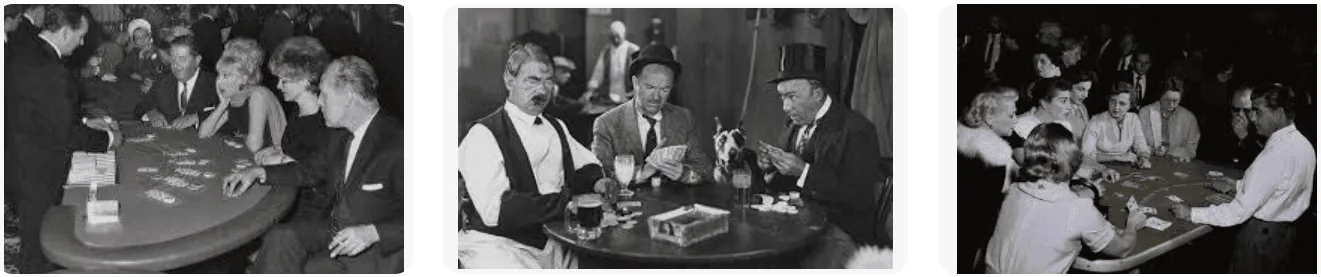
That uncertainty is part of what makes blackjack interesting.
Unlike baccarat, which carries a clearer aristocratic identity, blackjack developed in a much more practical way. It moved through gambling culture organically, shaped by players, casinos, and evolving rule sets rather than a single fixed origin. As the game made its way into American casinos, it continued to evolve. Different house rules, promotional variants, and local preferences gradually reshaped the experience. Over time, the name blackjack became standard, while twenty-one remained the technical description of the objective.
When I sit at a blackjack table today, that long evolution is still visible.
The game feels established, but not outdated. It does not rely on tradition alone. It feels refined through repetition. Every action at the table, hit, stand, double, split, exists because generations of players and casinos have pushed the game toward the form we recognize now.
Casinos that handle blackjack bonuses without aggressive wagering restrictions tend to work better for this game. 7Bit Casino is one I'd point to it has a large blackjack selection and clear bonus terms.
That is what makes blackjack different.
It was not designed once and preserved. It was adjusted, tested, and reshaped over time until only the most effective structure remained.
What the Goal of Blackjack Actually Is
At its core, blackjack is simple.
You are trying to build a hand that beats the dealer without going over 21. Aces count as 1 or 11, face cards count as 10, and all other cards keep their pip value. A two-card 21, meaning an ace plus any 10-value card, is called a natural or a blackjack, and it is the best possible starting hand.
At this level, everything feels straightforward. But there is one structural detail that changes the entire game.
- The player acts first.
That single rule defines the mathematics of blackjack.
If you bust before the dealer completes their hand, you lose immediately, even if the dealer would have busted as well. This is often referred to as the dealer’s positional advantage, and it is the hidden foundation of the game’s house edge. That is where blackjack becomes more interesting.
The game gives you freedom to make decisions, but it places you in a position where mistakes are more expensive. You move first, which means you carry the initial risk, and over time, that risk is what the casino relies on.
How a Blackjack Round Works
A normal blackjack round follows a structured and predictable rhythm.
First, players place their bets. The dealer then deals two cards to each player and two to themselves. One of the dealer’s cards is dealt face up, while the second remains face down, known as the hole card in the standard American format. If the dealer’s visible card is an ace, players are usually offered insurance. This is a side bet that pays 2 to 1 if the dealer’s hole card is any 10-value card, giving the dealer a blackjack. The insurance bet cannot exceed half of the original wager.
After the initial deal, the control shifts to the player. This is the point where blackjack clearly separates itself from games like baccarat or roulette. Instead of passively waiting for the outcome, the player must actively decide how to play the hand.
Available actions typically include:
- Hit, take another card
- Stand, keep your current total
- Double down, increase your bet and take one final card
- Split, if the first two cards form a pair, creating two separate hands
- Surrender, in some variations, giving up the hand early and losing only part of the bet
Once all players have completed their decisions, the dealer plays their hand.
Unlike players, the dealer does not make strategic choices. Everything follows fixed rules defined by the table. This usually means hitting or standing based on a predefined condition, such as dealer stands on soft 17 or dealer hits soft 17.
That small rule difference may seem minor, but in practice it has a measurable impact on the overall house edge.
When I evaluate a blackjack table, I never start with how it looks. I start with the rules printed on the felt and the signage around the table. A visually appealing setup means nothing if the conditions behind it are unfavorable. In blackjack, the rules are everything.
Card Values and the Meaning of Soft and Hard Hands
The scoring system in blackjack is straightforward, but the terminology behind it plays a crucial role in how the game is actually played.
A hand that includes an ace counted as 11 is known as a soft hand. For example, A-6 is a soft 17. The key advantage of a soft hand is its flexibility. If you take another card and go over 21, the ace can automatically shift from 11 to 1, preventing an immediate bust.
A hand without that flexibility is called a hard hand. For instance, 10-7 is a hard 17. In this case, there is no adjustment available, so if you take another card and exceed 21, the hand busts immediately.
This distinction is more important than it may seem at first.
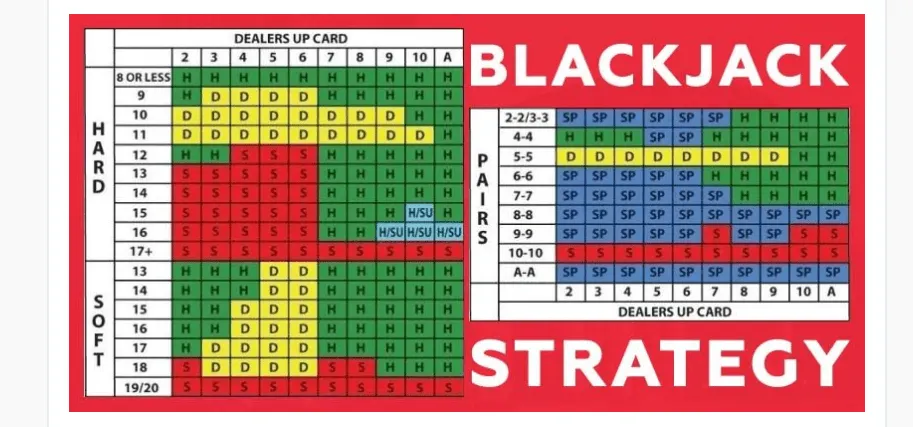
Strategy in blackjack changes significantly depending on whether your hand is soft or hard. A soft 17 can often absorb another card with relatively low risk, while a hard 17 is usually a stopping point because the probability of busting becomes too high.
That is one of the reasons blackjack becomes more interesting the more you play it.
From the outside, it looks like a simple game of addition. But in reality, decisions at the table are based not just on the total you see, but on the structure of the hand behind that number.
What a Natural Blackjack Pays
A real blackjack, meaning an ace paired with any 10-value card on the initial deal, is not just a regular winning 21. It is treated as a separate outcome with its own payout category. On a well-structured table, a natural blackjack typically pays 3 to 2, and this is the standard every player should be looking for.
However, not all tables are built the same.
Some offer a reduced payout of 6 to 5, and this is where many casual players lose value without even noticing it. The difference may seem small at first glance, but mathematically it is significant. Changing the payout from 3 to 2 to 6 to 5 increases the house edge by approximately 1.36% to 1.39%.
For blackjack, that is a major shift.
One small payout change can quietly turn a decent game into a weak one.
That is why I always treat 6 to 5 blackjack as a warning sign.
Not because the game becomes unplayable in absolute terms, but because it is one of the clearest examples of how casinos can subtly worsen the conditions while keeping the surface experience looking familiar.
If I see 6:5 on the felt, I treat it as a reason to find another table.
Why Blackjack Is Different From Baccarat
This is the part many players tend to overlook.
In Baccarat, most of the decision-making happens before the cards are even dealt. You choose your bet, often the statistically stronger Banker option, and from that point on, you are essentially a passive observer of the outcome.
Blackjack works in a fundamentally different way.
Here, the real decisions begin after the cards are on the table.
That shift alone completely changes the player experience.
In blackjack, the casino edge is not just built into the rules, it is also shaped by how well the player makes decisions throughout the hand. Under favorable rules and with proper basic strategy, the house edge in blackjack can drop below 0.5%, and in some optimized rule sets, even reach around 0.28%.
That number is not just a statistic. It explains why blackjack has always held a special place among more experienced players.
However, it is important to understand what that actually means.
Blackjack is not a beatable paradise for the average casual player. But it is one of the few mainstream casino games where the gap between poor decisions and correct decisions is measurable and significant over time.
In other words, how you play actually matters.
If you want to compare that with a game where player control is far more limited, read my Baccarat Game Guide, where I break down why baccarat feels strategic on the surface but remains largely passive once the bet is placed.
My Approach to Blackjack Strategy
I have seen players bring all kinds of emotion to blackjack.
Some approach it like a personal duel with the dealer.
Some react to every 16 as if the game is targeting them specifically.
Some trust their feeling more than the cards in front of them.
Others simply follow the loudest player at the table.
I do not.
My approach is much more mechanical.
It starts with a simple principle.
Blackjack is not a vibes game. It is a rules game.
Before I even think about playing a single hand, I look at the structure of the table. For me, blackjack always starts with the conditions, not the cards.
The first thing I check is the payout. Does blackjack pay 3:2, or is it the much weaker 6:5 version that quietly increases the house edge? Then I look at the dealer rule and whether the dealer stands or hits on soft 17. I also check if surrender is available, whether double after split is allowed, how many decks are in play, and whether the table uses a continuous shuffler.
All of these details matter long before the first card is dealt.
Only after that do I think about decisions, because in blackjack decisions should never be guesses. They should be based on mathematics.
The foundation of that approach is basic strategy. This is the mathematically optimal move for every possible player hand against the dealer’s up-card under a specific rule set. Many players make the mistake of thinking one strategy chart works everywhere, but that is not true. Even small rule changes can significantly alter the correct play.
In practice, this leads to a few simple but important principles. You do not take insurance as a routine habit because the house edge on insurance sits around 5.9% in single-deck games and about 6.01% in eight-deck games, making it a losing side bet over time.
You do not split hands simply because the option exists. You do not chase losses by increasing your bet after a bad run. And you do not assume that seeing “single deck” automatically means you are looking at a strong game. When I play blackjack, I actually want my decisions to feel almost boring. That is usually a very good sign.
Because the more dramatic, emotional, or “clever” your blackjack strategy sounds, the more likely it is quietly costing you money.
The Rules That Quietly Change the Math
This is where blackjack stops being just a game to play and becomes something you can actually evaluate.
Small rule changes matter far more than most players realize. One of the clearest examples is the number of decks in play. Even this single factor has a measurable impact on the house edge. In one specific rule set, the figures look like this: 1 deck: 0.014% 2 decks: 0.341% 4 decks: 0.499% 6 decks: 0.551% 8 decks: 0.577% These numbers are rule-dependent, but the overall pattern is consistent. Fewer decks generally favor the player, all else being equal. But deck count is only one piece of the puzzle.
Other rule variations also have a direct impact on the underlying math of blackjack.
Allowing double after split improves the player’s position because it creates additional profitable opportunities after splitting strong hands. It gives the player more flexibility and better long-term value in situations where the standard play would otherwise be limited.
Allowing late surrender also helps reduce losses over time. It gives the player the option to fold a mathematically bad hand and lose only half of the original bet instead of risking the full amount in a situation where the odds are already working heavily against them.
The dealer rule on soft 17 is another important detail. Whether the dealer stands or hits on soft 17 changes the balance of the table. If the dealer must hit, the house edge usually increases slightly because the dealer has more chances to improve weak hands.
Using a continuous shuffler changes the practical reality of the game as well. Even if the per-hand edge does not change dramatically, the game moves faster, more hands are played per hour, and that often means players lose money faster simply because they are exposed to the house edge more often.
These details may look small on paper, but over time they shape the entire quality of the game. In blackjack, the best tables are rarely identified by design or atmosphere. They are identified by rules.
This is why I often say that blackjack is one of the best games for evaluating a casino. It exposes everything. If a table offers fair, well-balanced rules, you can see it immediately. If the game is filled with small, unfavorable adjustments designed to increase the house edge, that is just as visible. Blackjack does not hide its structure. You just have to know where to look.
Where Blackjack Works Best Online
Today, blackjack has moved far beyond the traditional casino floor and settled firmly into the online space.
And the format that comes closest to the real thing is live casino.
Unlike standard RNG tables, live blackjack puts you in front of a real dealer in real time. The pace is different, the atmosphere is different, and the way the game feels is much closer to land-based play.
If you want to understand how online blackjack behaves in practice, not just in theory, my Live Casino Guide breaks down dealer pacing, delays, real-table dynamics, and the practical difference between live tables and standard digital formats.
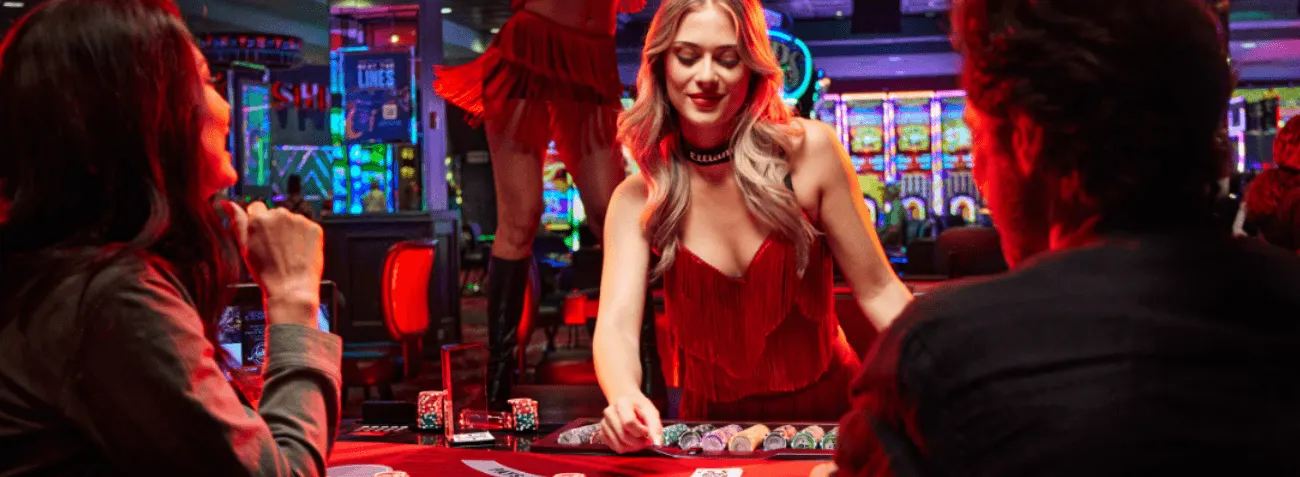
For anyone who enjoys blackjack but plays online, live casino is usually the format that matters most.
Cloudbet
- Evolution live blackjack tables
- Flexible table limits
- Excellent mobile live casino
ACEBET
- 650+ live casino titles
- Wide blackjack table selection
- Strong mobile table experience
Dexsport
- Evolution Gaming + Ezugi tables
- 100+ live casino tables
- Crypto-friendly deposits and withdrawals
Common Beginner Mistakes I See All the Time
When I watch casual blackjack play, the same mistakes show up again and again, regardless of where the game is being played.
The first is treating the dealer as if they are an opponent with intent. They are not. The dealer is simply the execution of fixed rules. There is no strategy on their side, only procedure.
The second is treating insurance as protection. It sounds logical, but in reality it is usually just a bad side bet. Most of the time, it quietly increases the player’s long-term losses.
The third is underestimating the importance of payout structure. Players tend to focus on minimum bets, but overlook whether the table pays 3:2 or 6:5. In practice, that single detail often matters far more than the bet size itself.
The fourth is assuming blackjack can be mastered purely by memorization. Basic strategy is essential, but it is not universal. The correct decisions depend on the specific table rules. A strategy chart for a single-deck game is not identical to one used for a four-deck or European blackjack format.
And the fifth is playing too fast. Blackjack quietly punishes speed driven by emotion. The game looks simple enough to fall into autopilot, and that is exactly when mistakes begin to appear, especially on borderline hands like 12s, 16s, doubles, and splits.
That is where small errors become expensive over time.
Why Blackjack Still Matters
Blackjack remains one of the most important casino games in the world because it does something very few casino games manage to do. It gives the player the illusion of control, but also a real, measurable portion of it.
Not enough control to eliminate the casino edge under normal recreational play, and definitely not enough to turn the game into some guaranteed profit machine. But enough that discipline, rule awareness, bankroll management, and correct decision-making genuinely affect long-term results.
That distinction is what makes blackjack different. In most casino games, your role ends the moment the bet is placed. Once the roulette ball spins or the slot reels start moving, the outcome is completely outside your hands.
Blackjack works differently. The result is still uncertain, but the path to that result depends on your choices. Every hit, every stand, every split, every double down carries mathematical weight.
That is also why blackjack remains one of the most educational table games in any casino. It forces players to think in terms of risk management, expected value, and emotional discipline. It teaches one of the hardest lessons in gambling: the move that feels obvious is not always the move that is mathematically correct.
Many players resist that idea at first. They trust instinct, emotion, or superstition. Blackjack punishes that approach quietly, over time.
That is why I still respect the game. Not as a fantasy, not as a shortcut to profit, and definitely not as a system you can master overnight.
I respect it because blackjack is one of the very few casino games where the difference between casual play and intelligent play is real, measurable, and impossible to ignore over a long enough timeline.
Authored by Cryptogambler Final Thoughts
Whenever someone asks me which casino game is the easiest to start but the hardest to truly understand, blackjack is always my answer. The basics are simple. Get to 21, or get closer than the dealer without going over. Aces count as 1 or 11. Face cards count as 10. A natural blackjack is the best possible starting hand.
That part takes only a few minutes to learn. But the deeper layer of the game is something entirely different. Because blackjack is not really about the cards. It is about structure. The structure of the table. The structure of the payout. The structure of the rules. And ultimately, the structure of your own decisions.
That is exactly why blackjack has survived every trend in casino culture.
From its roots in French and Italian gambling traditions to its evolution into one of the most important casino games in the world, blackjack has remained one of the very few table games where attention, discipline, and understanding genuinely matter. And that is what makes it different.
Not the mythology. Not the movies. Not the fantasy of beating the house.
The real appeal is much simpler.
Blackjack is one of the very few casino games that asks something from the player before it takes something back.
Where to Play Blackjack with Crypto:
7Bit Casino for a deep library of blackjack variants, Vavada for live blackjack tournaments, Velobet for hybrid fiat and crypto play.