
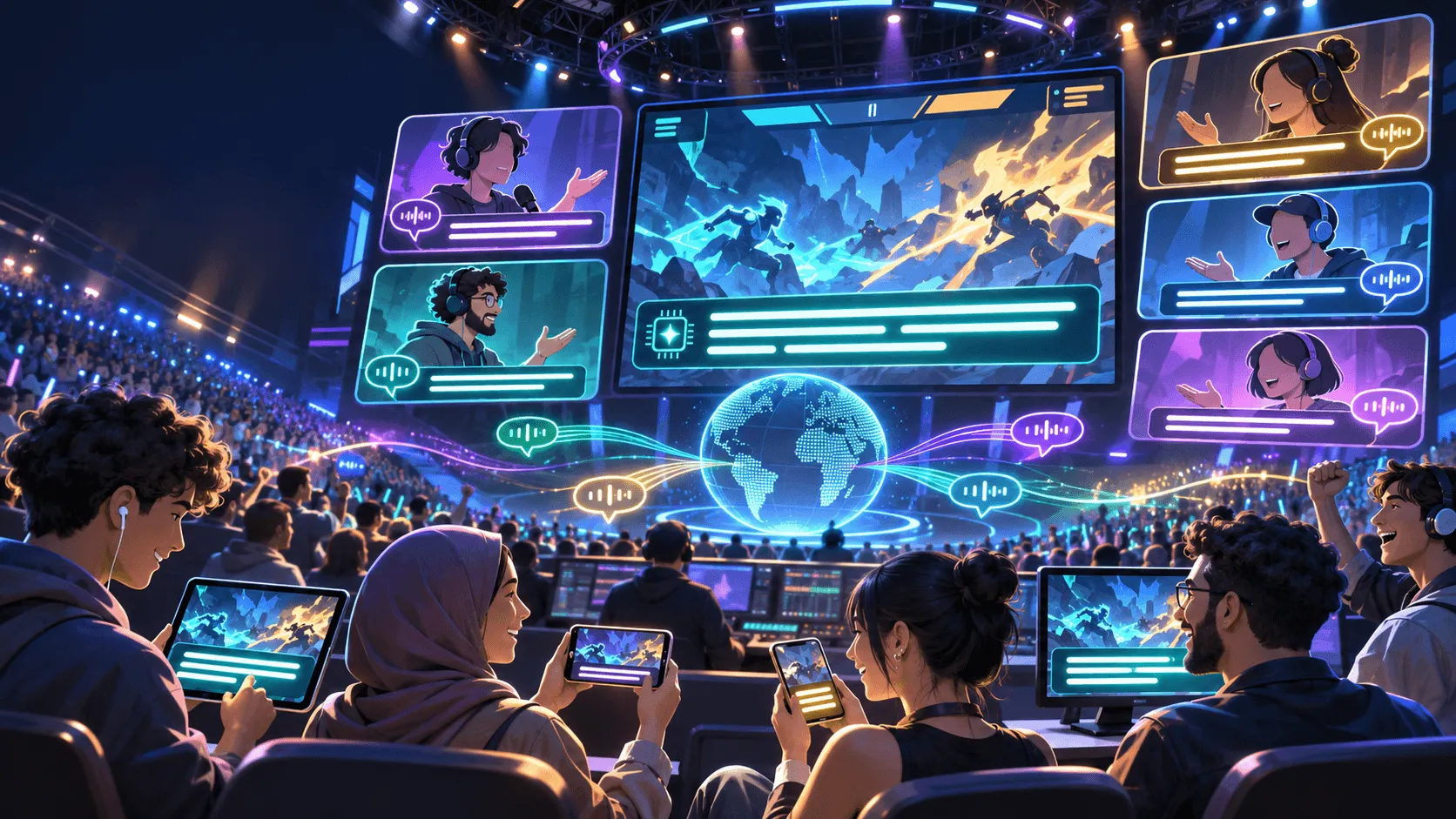
SOOP Adds English Co-Streams and AI Subtitles for Worlds 2026
SOOP is expanding its Worlds 2026 coverage with an official English co-stream, real-time AI subtitles for Korean player broadcasts and daytime replays for viewers across the Asia-Pacific region.
SOOP expands multilingual Worlds coverage
South Korean streaming platform SOOP has expanded its coverage of the 2026 League of Legends World Championship with an official English-language co-stream, AI-powered real-time subtitles and scheduled daytime replays for viewers in the Asia-Pacific region.
The additional coverage runs through the Grand Final and gives viewers more ways to follow the tournament beyond the standard official broadcast. Creator commentary sits at the center of the plan, with both professional players and established co-streamers adding their own analysis and reactions to the live match feed.
Eragon is listed as SOOP's official English-language co-streamer. The platform is also carrying Korean broadcasts from players connected to LCK partner teams, including Pyosik and Life from DN SOOPers, LazyFeel from KRX and Taeyoon from BNK FEARX.
For international fans following League of Legends, the important change is not only the number of available channels. SOOP is adding live subtitle technology to help audiences understand Korean commentary that would otherwise remain inaccessible without language knowledge.
AI subtitles support Korean player co-streams
The player broadcasts are primarily conducted in Korean. SOOP says its real-time subtitle system will allow international viewers to follow the players' observations and reactions while matches are in progress.
The platform's subtitle tools use speech recognition to convert microphone or system audio into text. Authorized broadcasters can enable subtitles for their live streams, and server-side processing can generate captions from broadcast audio. Supported viewing environments include desktop and mobile services, with subtitles also available on several connected devices and eligible replay formats.
This is particularly relevant for professional-player co-streams. Active competitors often discuss lane states, draft priorities, objective timing and team decisions using specialized language at high speed. Conventional highlights can summarize those comments later, but live subtitles give international viewers a chance to understand the reaction in the moment.
AI-generated captions are not the same as a human translation desk. Player names, champion names, rapid speech and overlapping arena audio can create recognition errors. Viewers should therefore treat the subtitles as an accessibility aid rather than a perfect official transcript. Even with that limitation, the feature lowers a significant barrier for fans who want to follow Korean analysis.
Co-streams provide different commentary choices
A co-stream combines the official match feed with commentary from a creator or professional player. The match remains the same, but the viewing experience changes according to the host's knowledge, personality and preferred level of analysis.
SOOP's event lineup includes seven official Korean co-streamers: Kim Min-gyo, Lee Sang-ho, Hello Suya, Smebim, Gamjagabi, Dudan and Gosegu. The professional-player broadcasts add another layer because current competitors can explain decisions from the perspective of someone working inside the same ecosystem.
The English channel gives international users a direct option without relying on subtitles. The Korean streams with AI captions serve a different audience: viewers who specifically want local player reactions but cannot follow every spoken detail.
This combination reflects a broader change in esports broadcasting. Major tournaments are no longer distributed through only one commentary desk. Audiences increasingly choose between official analysis, former professionals, active players, entertainment-focused creators and regional-language channels.
Daytime replays address difficult APAC schedules
Worlds 2026 is being played in the United States, creating inconvenient live start times for much of Asia. SOOP plans daytime rebroadcasts after matches conclude so viewers in the Asia-Pacific region can watch a complete presentation without remaining awake overnight.
A scheduled replay differs from isolated clips or a result page. It preserves the order of games, the draft phase and the tension of a full series. Fans who avoid spoilers can follow the tournament in a format closer to a live broadcast, even when the original match time is impractical.
The platform is carrying an English broadcast on its global League of Legends channel and a Traditional Chinese broadcast alongside Korean coverage. These options are designed to connect several regional audiences to the same event while retaining different commentary styles.
Replays also make the AI subtitle feature more useful. Captions included in an eligible live broadcast can remain available in supported video-on-demand formats, allowing viewers to pause or review analysis that was difficult to follow in real time.
Accessibility becomes part of esports distribution
Real-time translation and subtitles are increasingly important for global esports because much of the most valuable commentary is regional. Korean professionals may explain an LCK approach, Chinese-language analysts may focus on LPL habits, and European creators may interpret the same draft through a different competitive history.
Without translation, those perspectives remain divided by language even when everyone is watching the same match. Automated subtitles do not remove every barrier, but they can make specialist commentary available to a broader audience without requiring a separate human broadcast team for every channel.
The technology also supports viewers who prefer captions because of hearing needs, noisy environments or silent viewing. In that sense, the feature is not limited to cross-language translation. Converting speech into readable text can improve access even when the viewer understands the original language.
Accuracy and delay will remain key tests. Esports commentary contains nicknames, abbreviations and rapidly changing game states. A useful system must distinguish those terms quickly enough that subtitles still match the action. Public deployment during Worlds gives SOOP a large live environment in which viewers can assess how well the technology handles those challenges.
A broader competition between streaming platforms
SOOP is not the only platform adding interactive and multilingual features around Worlds. Official streams, authorized creators and regional services are competing on commentary choice, accessibility, replay timing and community participation rather than simply access to the match feed.
For viewers, that competition creates more control. A fan can choose a traditional broadcast, an analytical co-stream, a player-led Korean channel with subtitles or a replay scheduled for a more convenient hour. The same series can support several types of audience without changing the underlying competition.
The expanded Worlds 2026 coverage shows how live translation, creator commentary and regional scheduling can work together. If the subtitles remain accurate enough during fast professional analysis, the approach could become a reusable model for other international esports events on the platform.
Source: SOOP and Inven Global.


