
K/DA's Worlds 2026 Return Hinged on a 38-Second Backstage Change
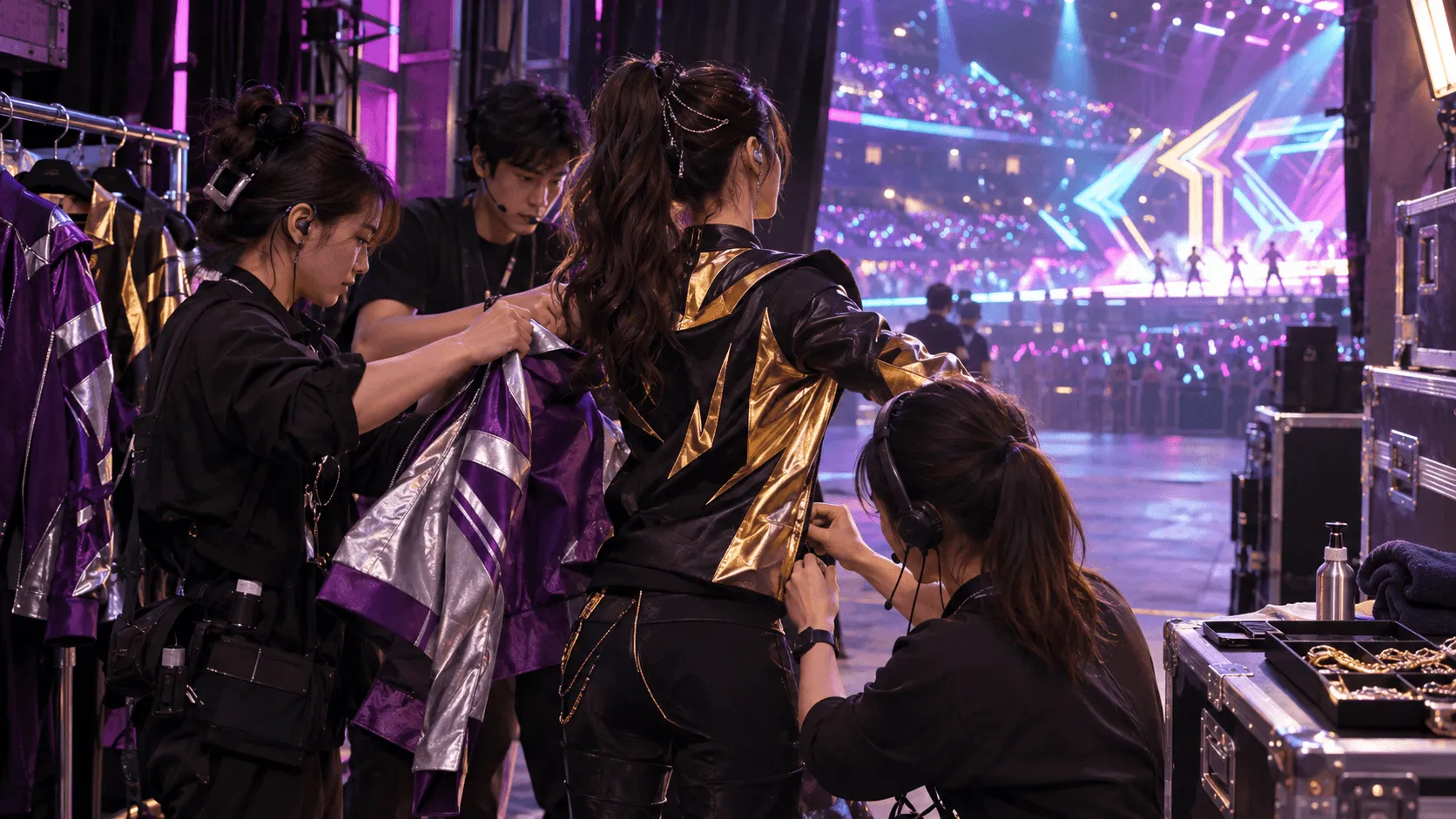
Riot staff have revealed how Soyeon completed a 38-second costume change between K/DA and True Damage during the Worlds 2026 final opening ceremony in New York.
The fastest transition of the Worlds 2026 ceremony
The 2026 League of Legends World Championship final did not begin with a draft or a level-one fight. It began with a production challenge measured in seconds.
During the November 14 opening ceremony at Barclays Center in New York, Soyeon appeared in both the K/DA and True Damage segments. Riot staff have now explained that she had only 38 seconds to leave one performance, change her complete stage look and return in time for her next verse.
The transition required precise coordination between the wardrobe team, the performers, Riot staff and Cube Entertainment. Soyeon reached the stage on schedule, turning a high-risk backstage operation into a seamless part of the broadcast. Viewers saw two distinct performances, while the most demanding moment happened out of sight.
That detail gives the ceremony a different competitive dimension. The final was built around elite players, but its opening also depended on a crew executing a rehearsed plan with almost no margin for error.
K/DA returned to the Worlds stage after eight years
Soyeon and Miyeon performed together as K/DA members at Worlds for the first time since the group's 2018 debut. Their original roles remain closely connected to the project: Soyeon represents Akali and Miyeon represents Ahri.
The 2026 lineup also featured Sophie Powers as Evelynn and Mimi Webb as Kai'Sa. K/DA performed the new song FIRESTARTER before the ceremony moved into the True Damage section built around the 2026 Worlds anthem, Know My Name.
Soyeon's presence in both groups created the difficult transition. Akali belongs to the identity of K/DA and True Damage, but each group has a different visual language. Reusing the same outfit would have weakened the change from one musical universe to the other, so the production treated the wardrobe switch as part of the story rather than a minor backstage task.
The result was a return designed for both long-time K/DA followers and viewers discovering Riot's virtual music projects through the 2026 final.
Riot's TFT team helped connect the artists and music production
The new details came from an interview with Junwoo Kim, Riot Games' TFT Korea Publishing Lead, and Harim Jung, TFT Community Manager. Although both work with Teamfight Tactics, they helped connect Riot's music operation with the Korean artists and their staff during the ceremony.
Kim had already worked on K/DA's 2018 debut. He helped establish the collaboration with Soyeon and Miyeon when i-dle was still early in its rise, then remained involved in later music and content projects. That relationship became useful again when Riot prepared K/DA's 2026 comeback.
Jung supported the on-site coordination in New York. The role went beyond schedules and artist logistics. The staff also checked how the performers represented their champions and helped translate game details into elements that would work on a live stage.
Their involvement shows how Riot's esports productions operate across internal teams. The opening ceremony was not handled by a single isolated event department. Knowledge and relationships built through music, publishing, community work and different Riot games all contributed to the final broadcast.
A fan's Akali glasses reached the main stage
One of the smallest details came directly from the community. During a player meet-and-greet, Soyeon and Riot staff met an Akali cosplayer whose glasses closely matched the champion's look. The cosplayer agreed to lend the prop for the performance.
The glasses then became part of Soyeon's stage appearance. It was a brief contribution, but it connected fan craftsmanship with the official Worlds production at the biggest event of the competitive season.
Riot staff also described how the performers studied the champions before the ceremony. Miyeon and Soyeon paid attention to movement, styling and character details instead of treating the roles as ordinary concert costumes. The preparation helped preserve the link between the artists on stage and the identities players recognize in the game.
That authenticity matters because K/DA works in two directions. It must function as pop music for a broad audience while still feeling credible to League players who know every champion reference.
Artist selection starts with character fit
Kim explained that Riot does not choose collaborators only by popularity. The central question is whether an artist's performance style and voice fit the champion being represented.
That approach shaped the original 2018 casting. Soyeon's intense rap delivery and stage presence matched Akali, while Miyeon's vocal role and performance style suited Ahri. The partnership grew as K/DA became one of gaming's most recognizable virtual music projects.
The same principle remains important as Riot expands its music universe. A famous name can attract attention, but the ceremony also has to convince viewers that the performer and champion belong together. Worlds provides a global stage where a mismatch would be immediately visible.
Riot staff did not confirm any specific future artist partnerships in the interview. They said opportunities are considered when the right project and character fit appear, so possible collaborations should not be treated as announced plans.
What the 38 seconds reveal about modern esports
The backstage change is more than an entertaining production anecdote. It shows how major esports events now combine competition, live music, character performance, broadcast technology and fan culture in one program.
For the audience, the opening ceremony has to feel effortless. Cameras must move to the correct position, performers must enter on cue, digital effects must align with the music and wardrobe changes must finish before the next section begins. A delay of only a few seconds can disrupt the sequence.
For organizers, that complexity creates both opportunity and risk. A successful ceremony can reach people beyond the core competitive audience and give a final its own cultural identity. A failed transition can distract from the match that follows.
The Worlds 2026 team managed that pressure by treating the 38-second change like a competitive execution problem: assign clear roles, rehearse the sequence and trust every person involved.
A comeback built on continuity
K/DA's return was presented as a major revival, but the production worked because it also preserved continuity. Kim's relationship with the project went back to 2018. Soyeon and Miyeon returned to the roles that helped define the group. Fans contributed details, and experienced staff translated the original concept for a larger 2026 stage.
The ceremony therefore connected different periods of League esports rather than simply repeating an old success. It acknowledged the original K/DA identity while using a new lineup, a new song and a shared performance with True Damage.
The most memorable technical detail may remain the one viewers never noticed live. In 38 seconds, a backstage team completed the transformation that allowed Soyeon to move from one virtual group to another without breaking the ceremony's rhythm.
Source: Inven Global interview with Riot Games TFT Korea Publishing Lead Junwoo Kim and TFT Community Manager Harim Jung.


